
[Access] About 90 minutes by car from Hari IC on National Route 25
[Website] Shionoha Onsen Yumoto Yamabato-yu (Japanese)
On my way to Odaigahara, I was looking for a hot spring to visit after my hike, checking for onsen information while driving. I thought there weren’t many onsens in the area, but to my surprise, there were quite a few signs indicating hot springs, such as Oouda Onsen and Yumori Onsen (Sugi no Yu) along the route. I also spotted a sign for Shionoha Onsen Yamabato-yu, which piqued my interest even though it wasn’t directly on my route.
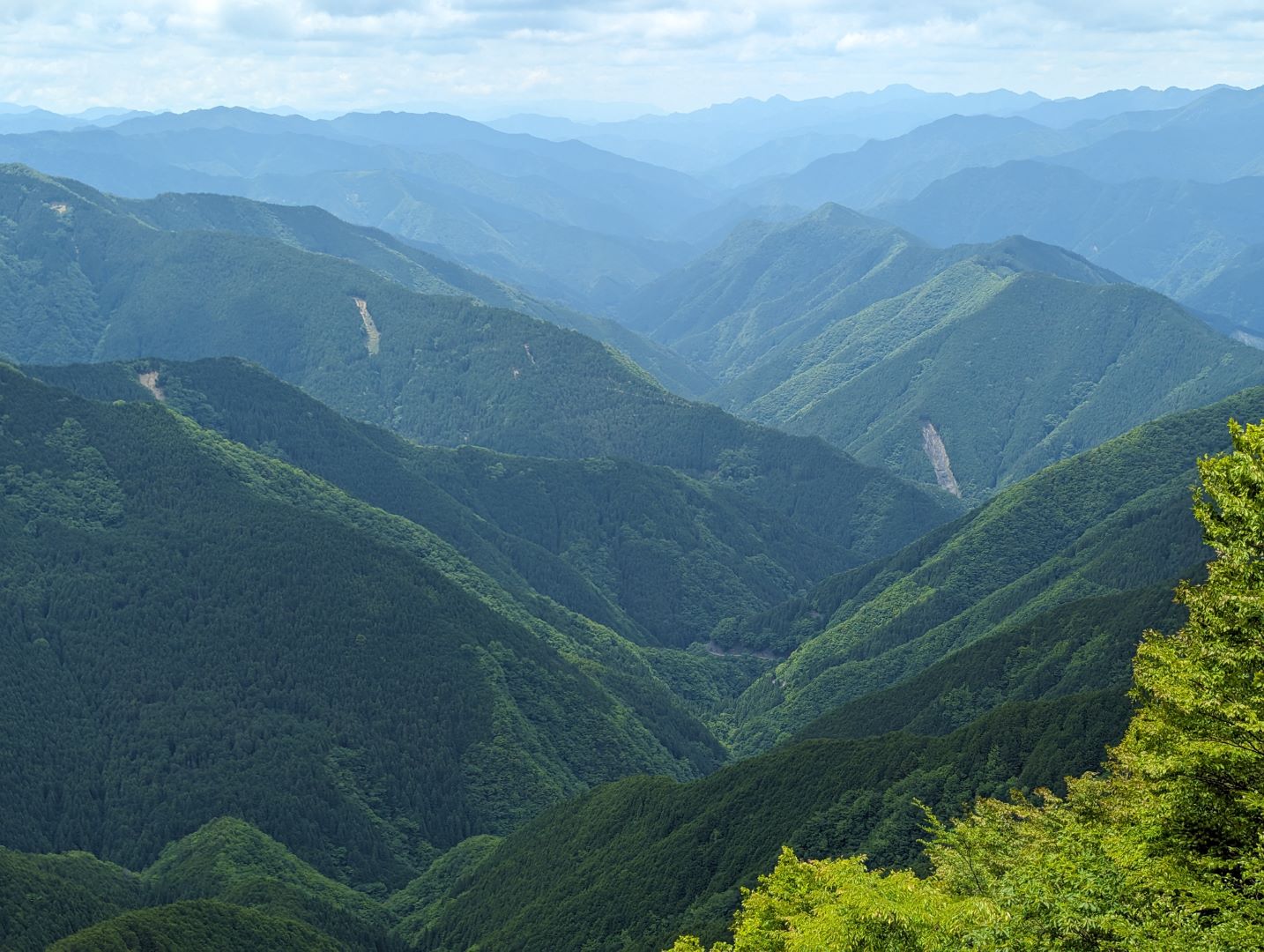


The pamphlet at the Oodaigahara parking lot mentioned Kami-Kitayama Onsen, an alkaline spring that caught my attention. However, due to its late opening time for day-use, I decided to head towards Shionoha Onsen. After crossing the Oosako dam management facility then driving about 4 Km, I found narrow parking lot for three cars. Some cars parked tightly along a steep, narrow road because it was already full. This secluded, hidden gem vibe made me hopeful that a wonderful onsen awaited.

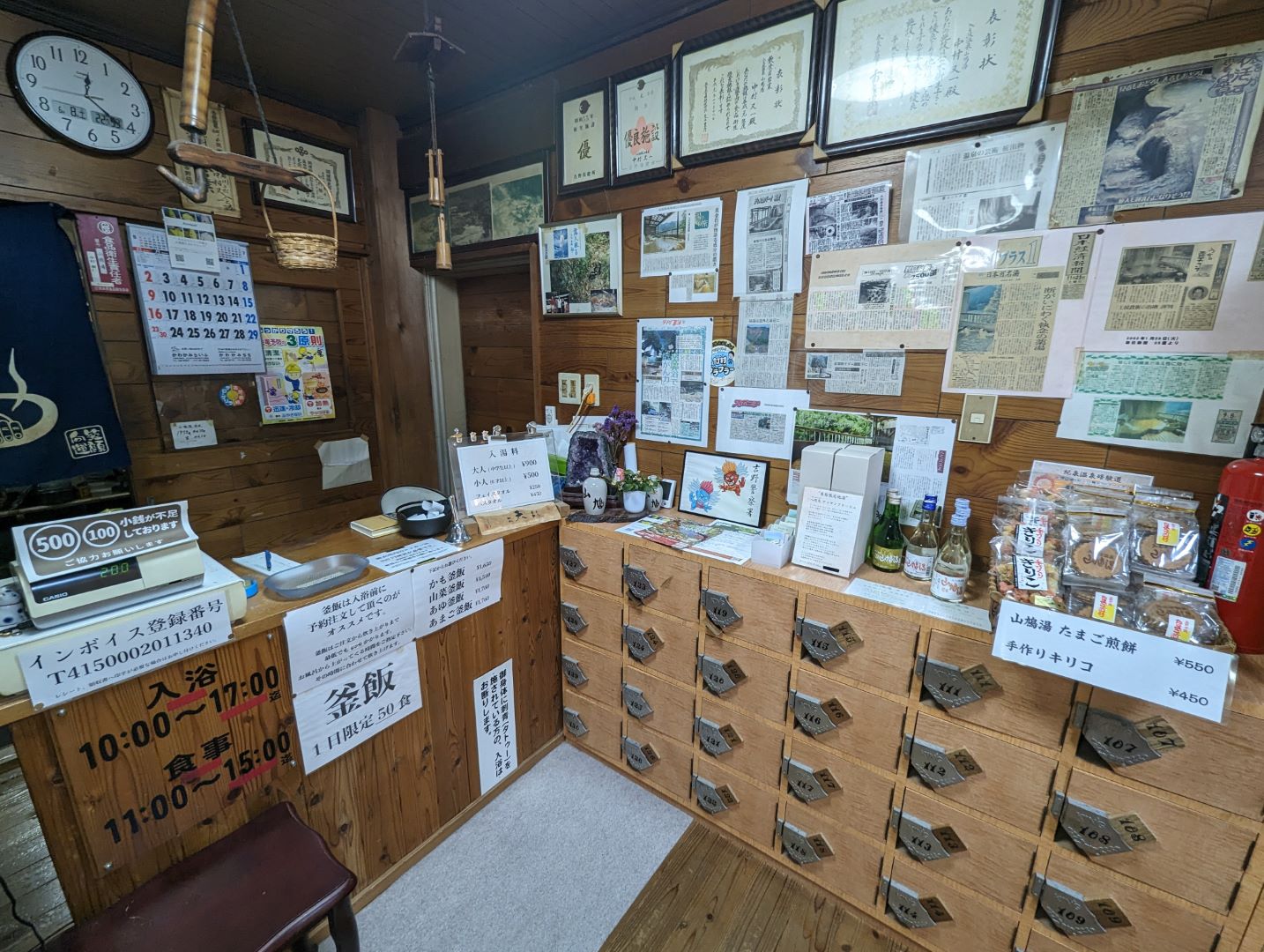
At the reception, I paid the admission fee of 900 yen and was directed to the baths. I noticed that the restaurant next to the reception was serving kamameshi (traditional Japanese rice dish cooked in a small iron pot called a “kama”), and everyone seemed to be enjoying it. If I hadn’t had kakinoha-zushi (persimmon leaf sushi), I would have been going for the kamameshi.


Upon entering the bath area, I was struck not only by the brownish water but also by the incredible amount of mineral deposits covering the tub. A thin white film floated on the surface, which was explained as calcium deposits. The bath is made from round logs of cedar, but it looked more like a ceramic vessel due to the extensive mineral buildup.
The onsen water is classified as a bicarbonate spring, with a temperature of 39.6°C and a total mineral content of 4,907 mg/kg. I expected the onsen water to be denser due to the deposits, so I was a bit surprised. The indoor bath’s water is poured generously from a section enclosed by corrugated metal, and interestingly, the water flows from the indoor bath to the outdoor bath through a small opening just below the window frame. This structure likely helps regulate the temperature, making the outdoor bath perfectly warm for relaxation. It was common to see people napping in the outdoor bath, and the notice about long bathing times in the changing area made sense.

The outdoor bath was also heavily covered in mineral deposits, obscuring its original shape. The view of the dam and the lush greenery was beautiful, and with the pleasant breeze typical of this season, the slightly warm water made it easy to stay in for a long time. I never expected to encounter such a wonderful hot spring today – what a lucky find!