
[Access] About 10 minutes by car from the Ueda Sugadaira IC on the Joshin-etsu Expressway
[Web page] Senko Onsen (SENKO TINY CAMP)
After climbing Mt. Azumaya, I found Senko Onsen while searching for a place to soak, which is my usual routine. The slightly unusual name and the fact that it’s connected to the Sanada clan piqued my interest. Just as I was almost there, the road suddenly became very narrow, and I had to wind down a steep curve wondering if I’d even make it. At the bottom, I found a building that looked like a traditional ryokan (inn) rather than just a day-use facility. There were only about three parking spaces, but luckily one was available.
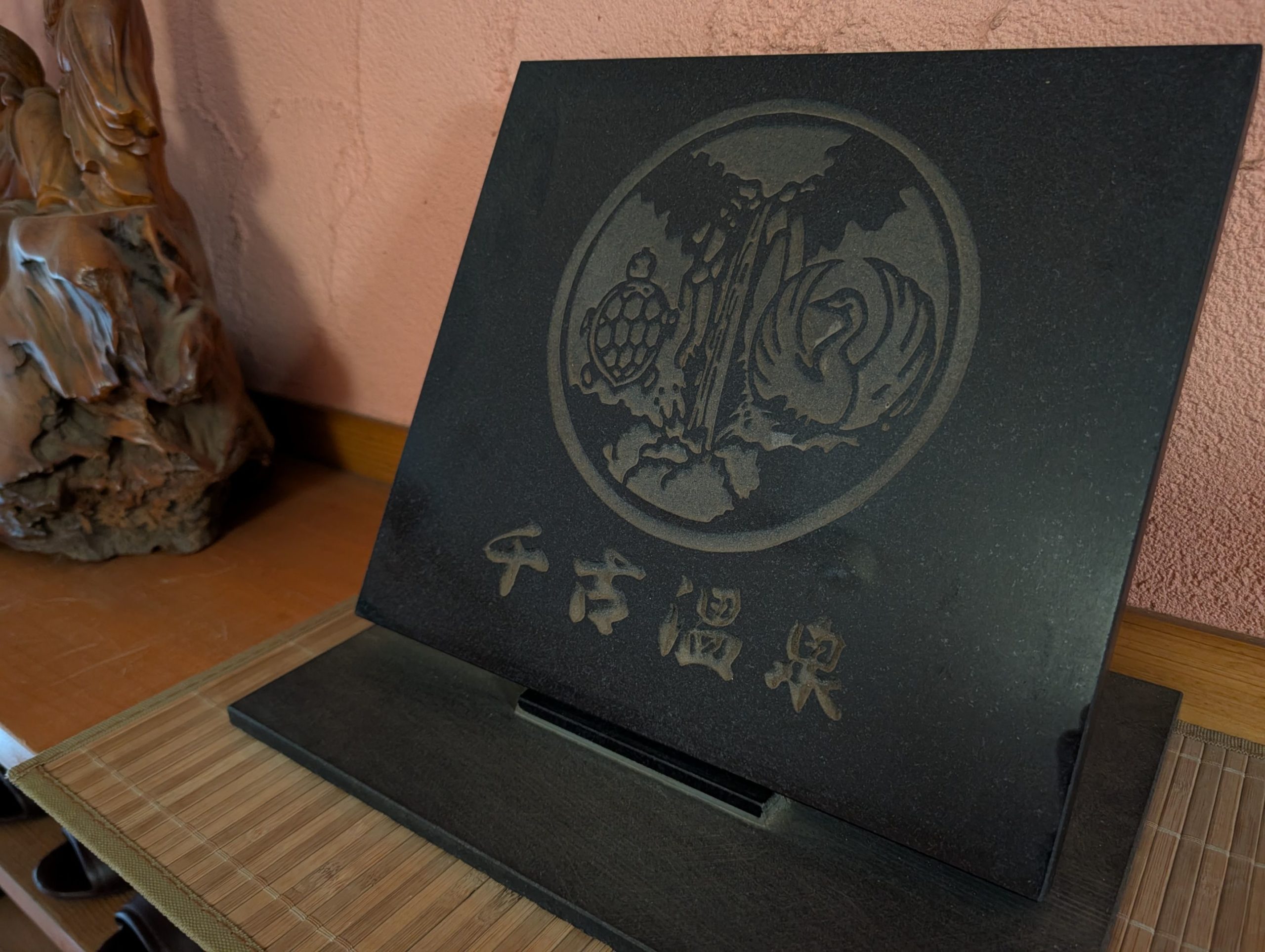
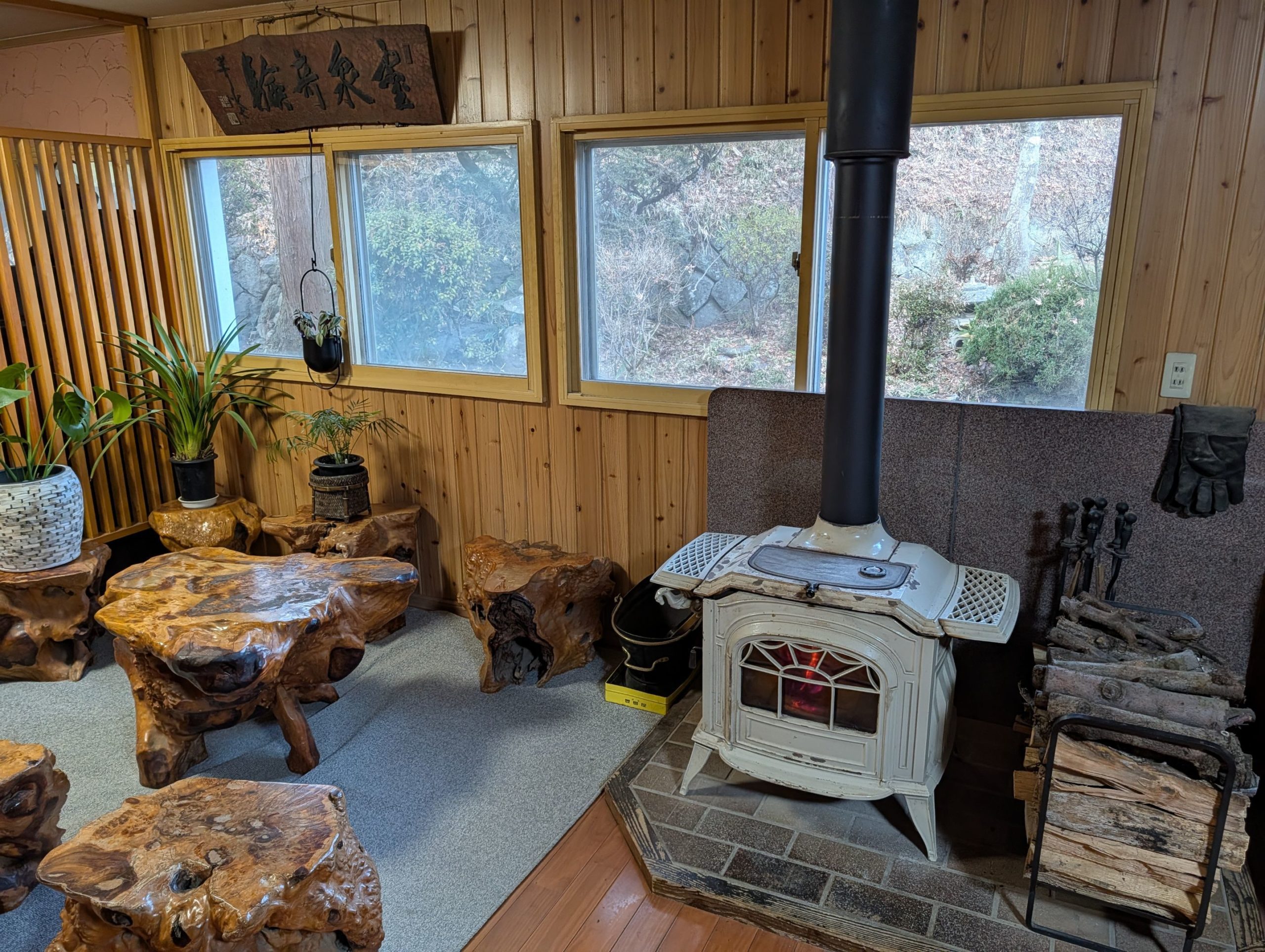
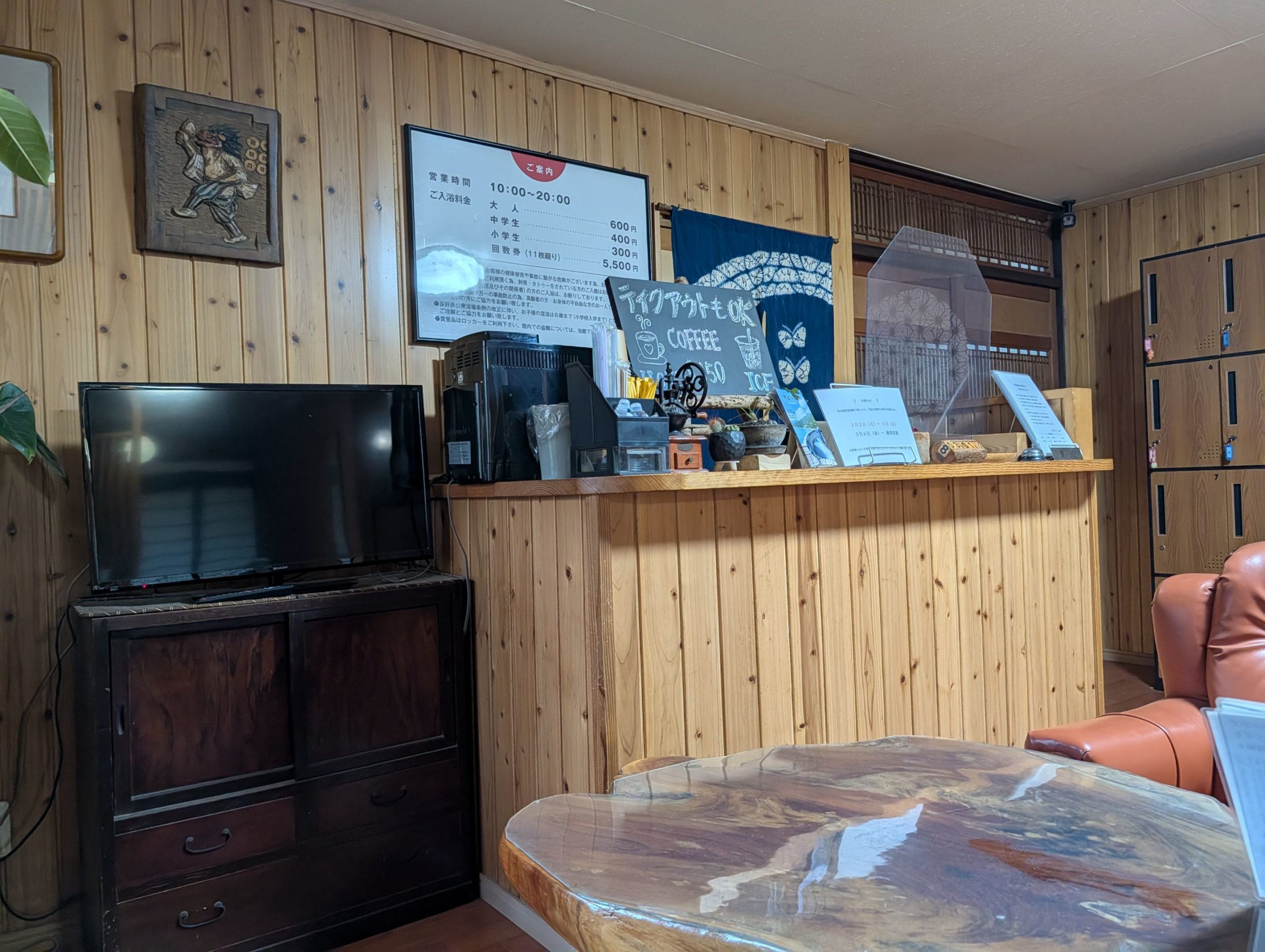
Not just the exterior, but the atmosphere inside felt more like a boutique inn than a public bathhouse. Even though it’s March, it’s still quite chilly, so having the fireplace going felt really nice.
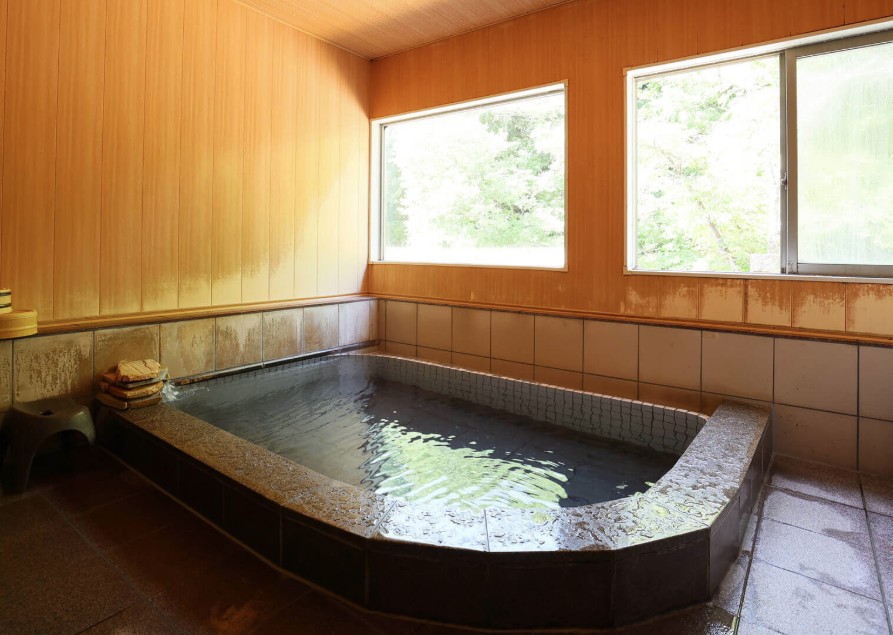
Senko Onsen doesn’t have an outdoor bath, just a small indoor one. As soon as you enter the bathroom, there’s a faint scent of sulfur that gets you excited. On the other hand, the tub is truly tiny—at that moment, it was at its limit with just four of us inside. The water is a simple sulfur cold mineral spring with a source temperature of 24.4°C. The total mineral content is 528 mg/kg with a pH of 8.6, giving it an alkaline, slightly slippery feel. What’s interesting is that when you touch the bathtub, your hands get coated with a black substance. At first, I thought it was something related to the sulfur.
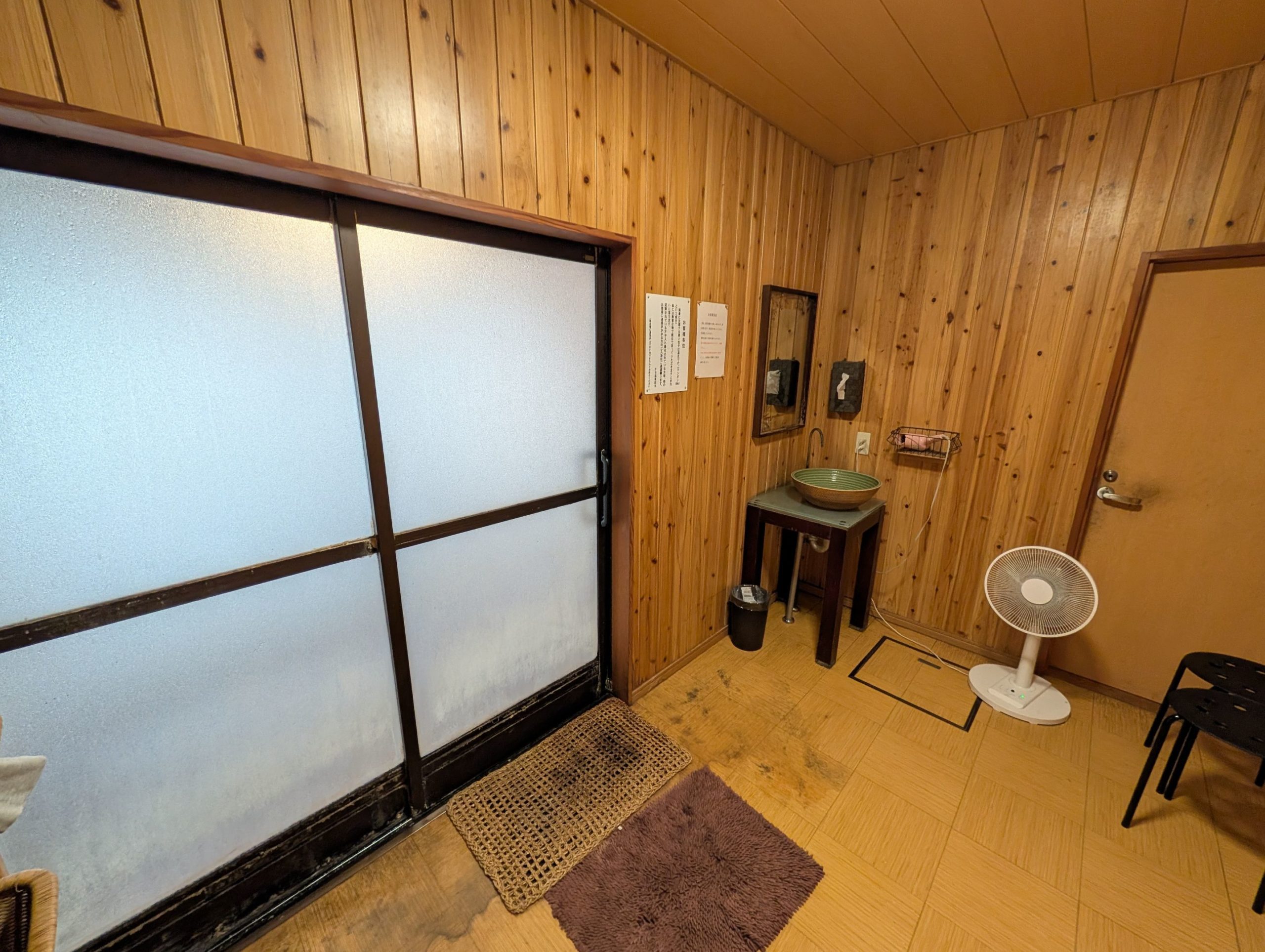
The parts that touch the tub turn quite black, which explains why the changing room floor is also stained black… The facility is generally very clean, so I was wondering why there was “mold” in a place like this, but it turns out it’s just due to this black component in the water.
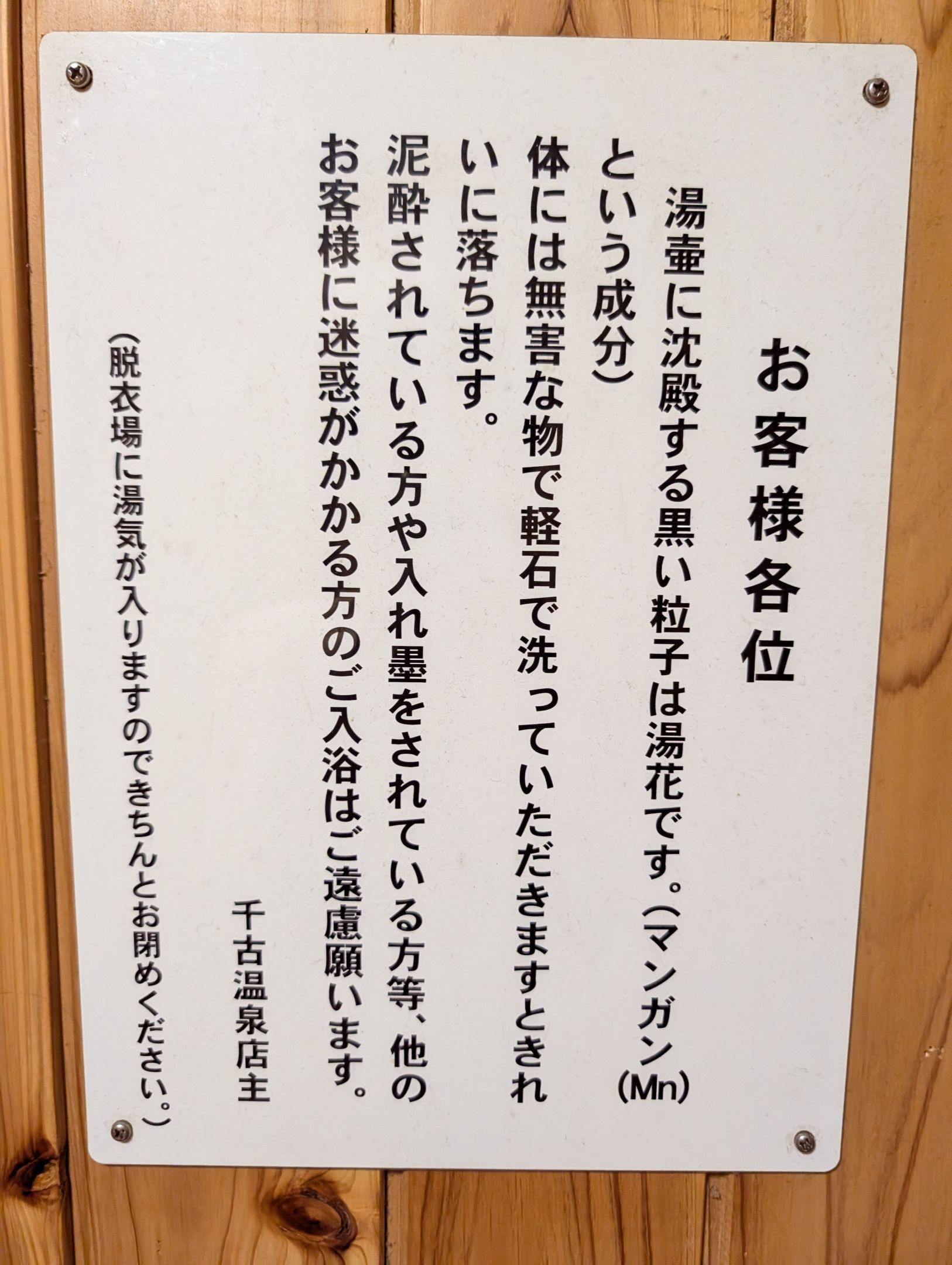
I don’t usually look at onsen components in great detail, so I haven’t paid much attention at other places, but I think this is the first time I’ve seen an onsen mention manganese. Furthermore, on the mineral content analysis sheet where amounts are usually listed in mg (milligrams), manganese and barium ions (I don’t think I’ve ever seen barium listed either…) were noted as “traces” (konseki). I looked it up later, and apparently, “trace” in an onsen analysis means the component is present at less than 0.1 mg per 1 kg of water. It’s mysterious how such a tiny amount can turn things so black.
Fortunately, no more than four people showed up, so I was able to relax and enjoy this unique water despite the small space. Even after getting out, the water kept my body toasty warm for quite a while. It’s an onsen I’d definitely love to visit again if I have the chance.