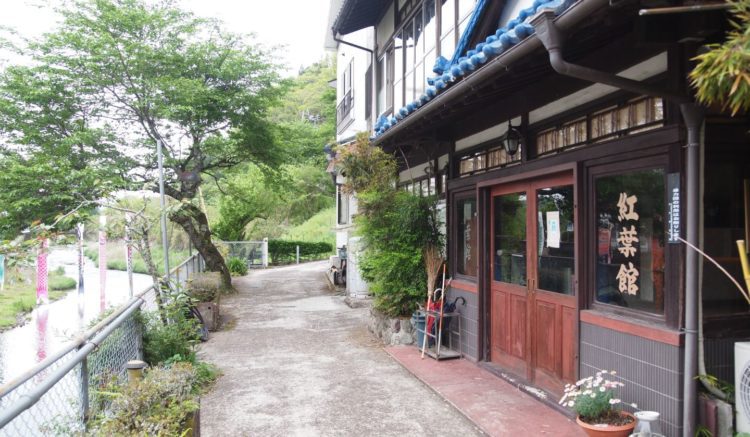
[Access] About 30 minutes by car from JR Bungo-Taketa Station on the Houhi Line.
[Website] Nagayu Onsen, Kōyōkan (Japanese)
I stayed at Kōyōkan, a ryokan with a classic atmosphere located in the hot spring district. I had already enjoyed a relaxing bath at the public bathhouse, Chōsei-yu, so I waited a bit before trying the bath at the ryokan. At the stairs leading to the bath, there was a large board with information about the onsen, and the strong emphasis on the hot spring made me even more excited.
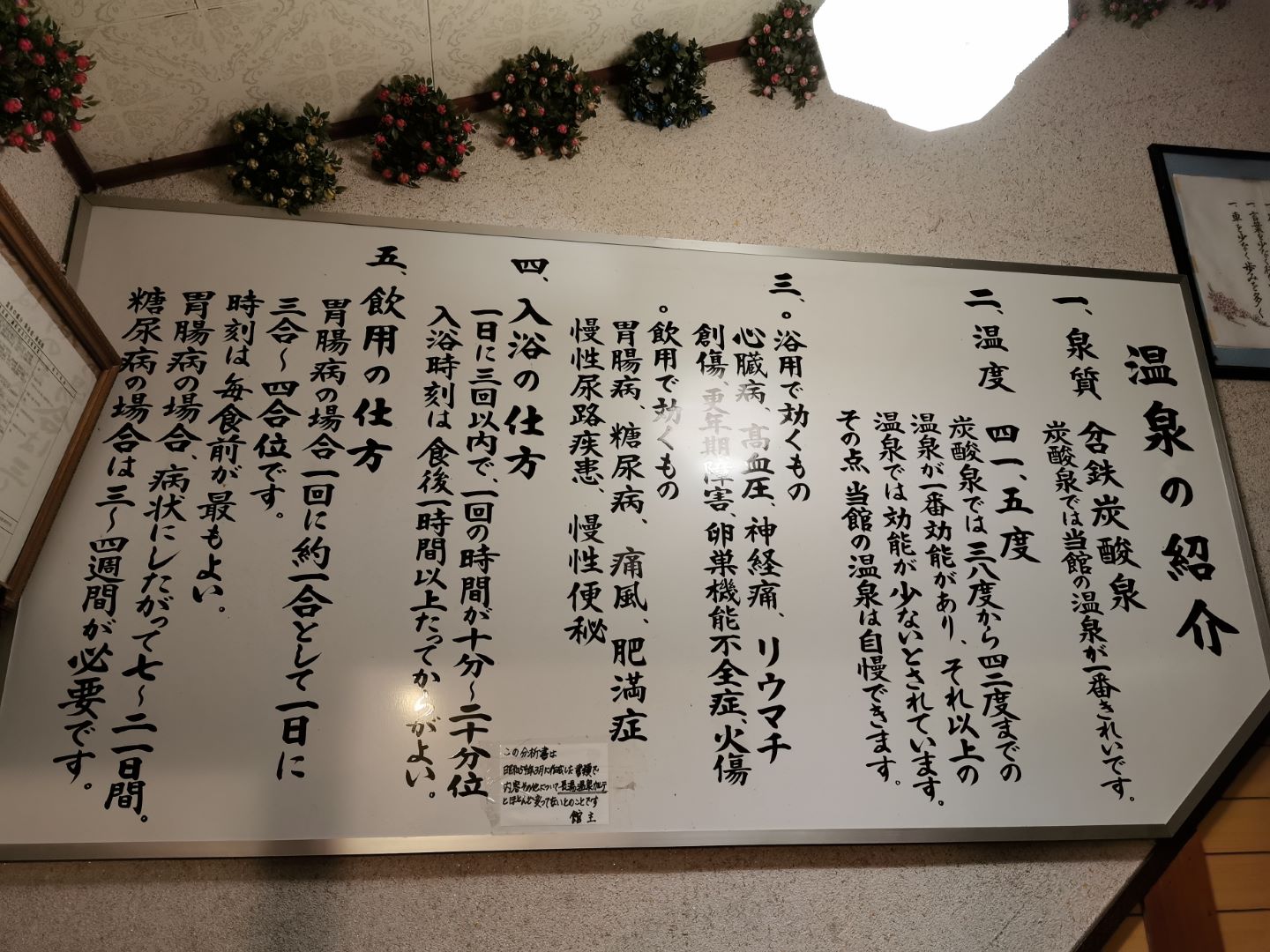
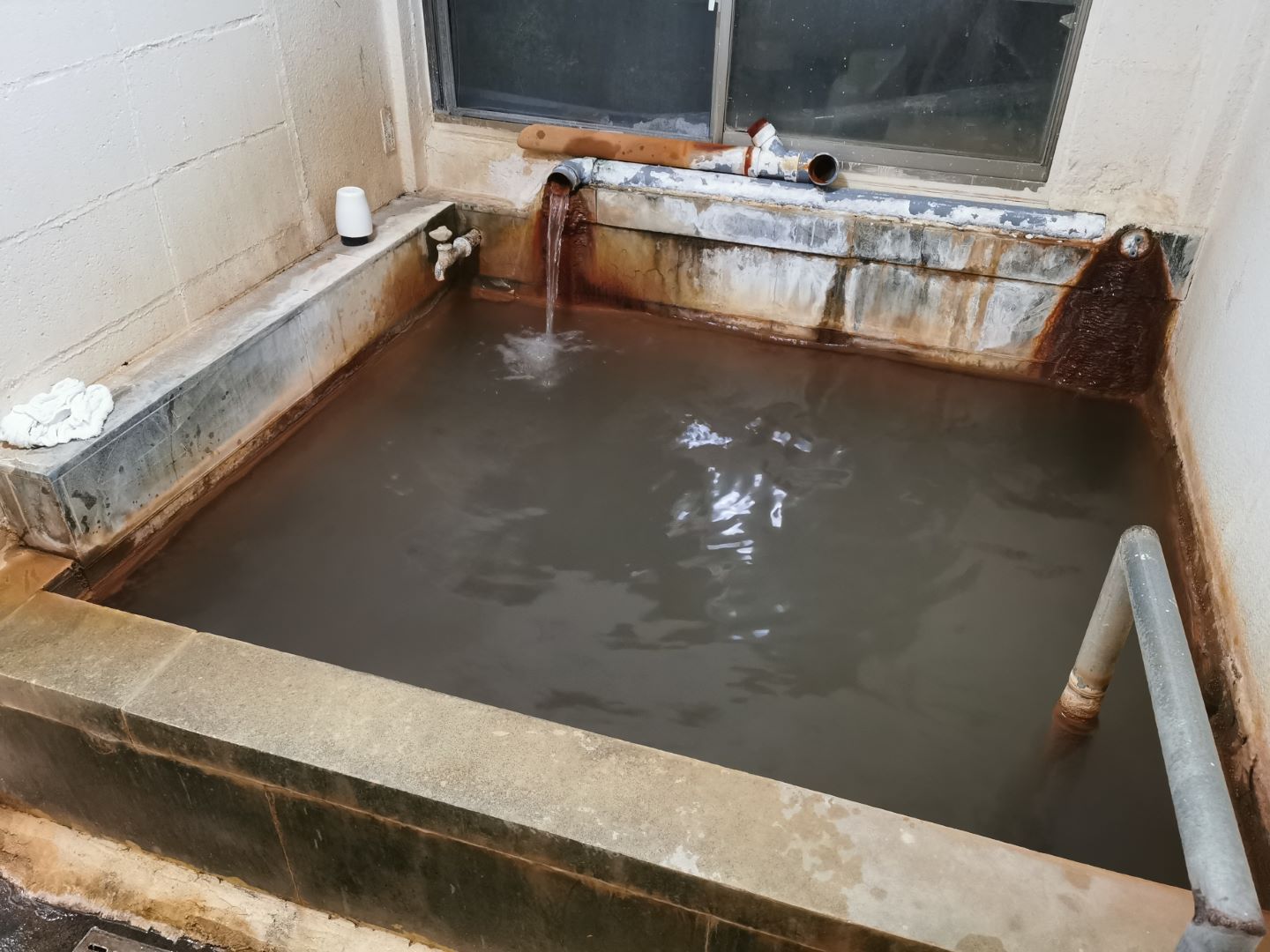
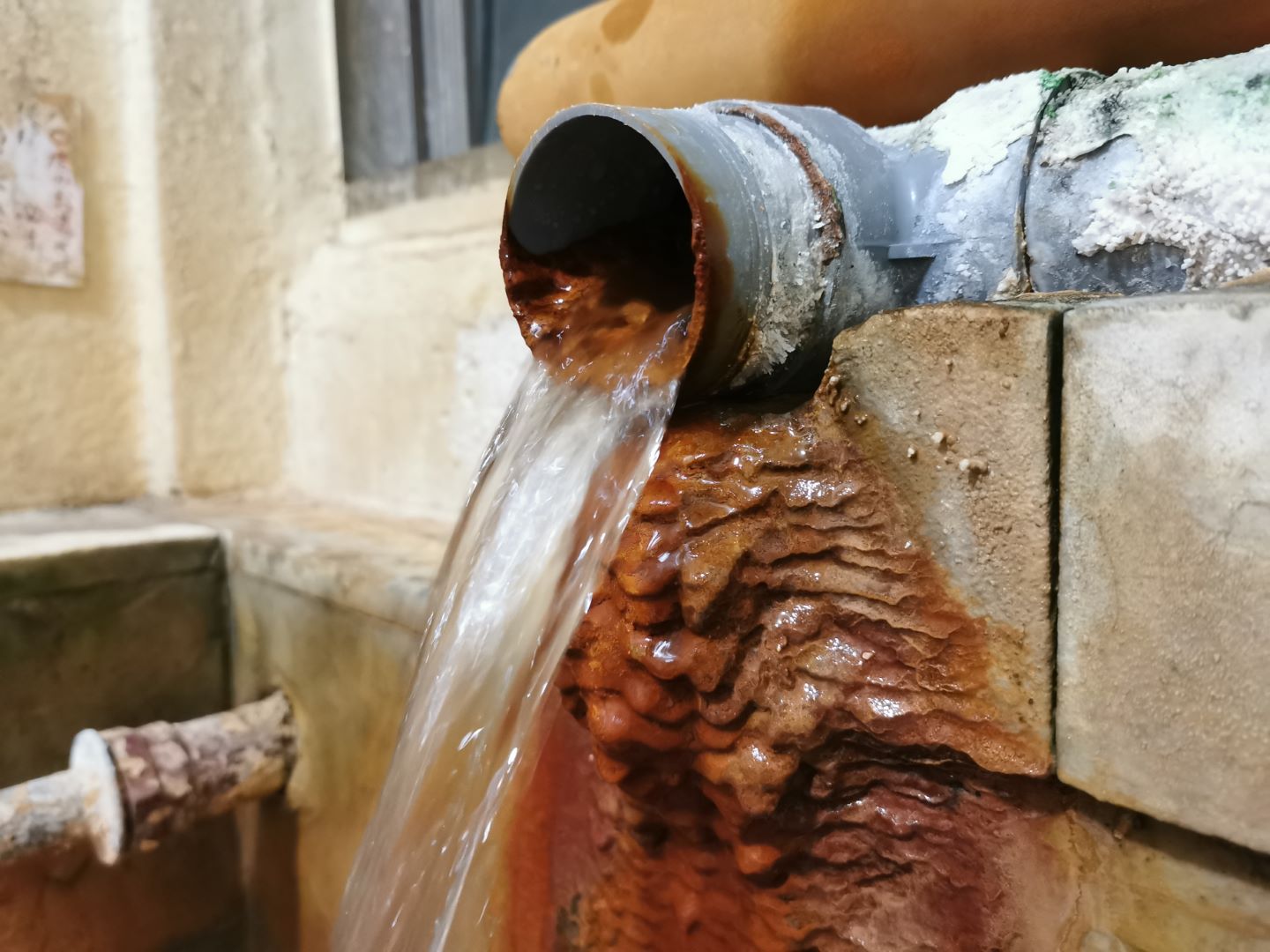
The source of Kōyōkan’s hot spring is a bit cooler than Chōsei-yu, at 41.5°C. The board described the onsen water as “clean,” probably because it’s colorless and transparent when it flows from the source. When it fills the bath, it becomes slightly cloudy but doesn’t have the thick murkiness or color like Chōsei-yu. Since the onsen water is drinkable, I tried it and immediately noticed a slight effervescence. The warm temperature makes it perfect for soaking for a long time. The texture of the water feels smoother compared to Chōsei-yu, and despite being so close to it, the two onsen had quite different impressions.
The bath itself was simple, but the deposits on the faucet and the strong carbonation felt like the onsen water would do good for the body. I can understand why they proudly claim their onsen is excellent – it’s truly a great hot spring that warms you well.
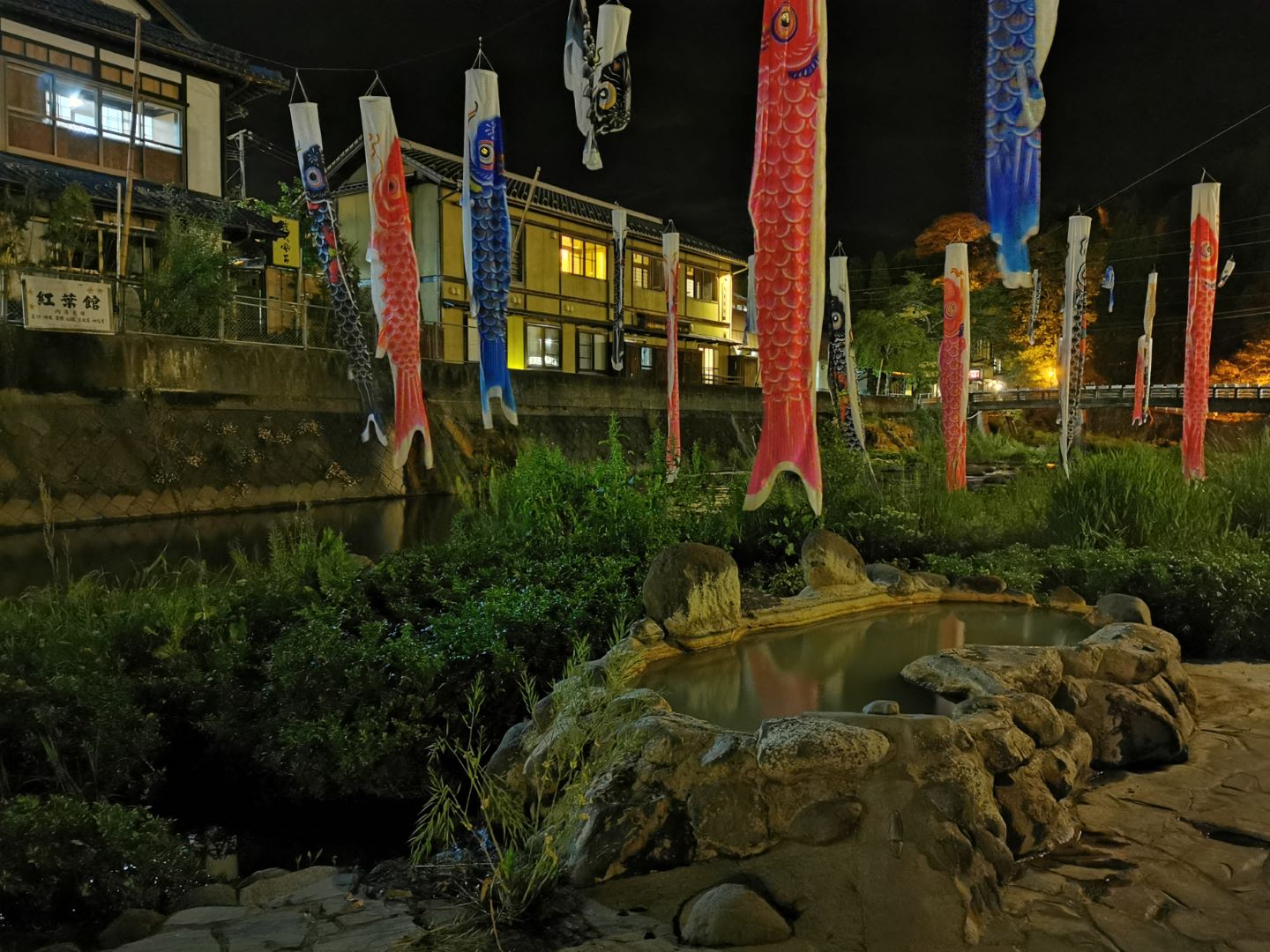
Behind Kōyōkan, across the river, there’s an outdoor bath called Gani-yu (Japanese). It’s completely visible from the ryokan and the riverside path, and there’s no changing room, so it would take quite a bit of courage to use it! I saw an old man soaking in it during a morning walk. His courage is impressive 🙂 The bath didn’t seem to have hot spring flowing in from above, so I wondered if it’s naturally sourced from the bottom. I was curious, but I didn’t dare to try it.