[Access] About 30 minutes by car from JR Bungo-Taketa Station on the Houhi Line.
[Website] Nagayu Onsen, Chōsei-yu (Japanese)
I had planned to enjoy hiking on Kyushu’s Kuju, Taisen, and Sobo mountains during Golden Week, but most of the popular inns in the hot spring areas were already fully booked. In the midst of this, I was lucky to find availability at Kōyōkan in Nagayu Onsen, famous for its carbonated springs, which I had completely forgotten about. After enjoying dinner, I quickly headed to the public bathhouse, Chōsei-yu.
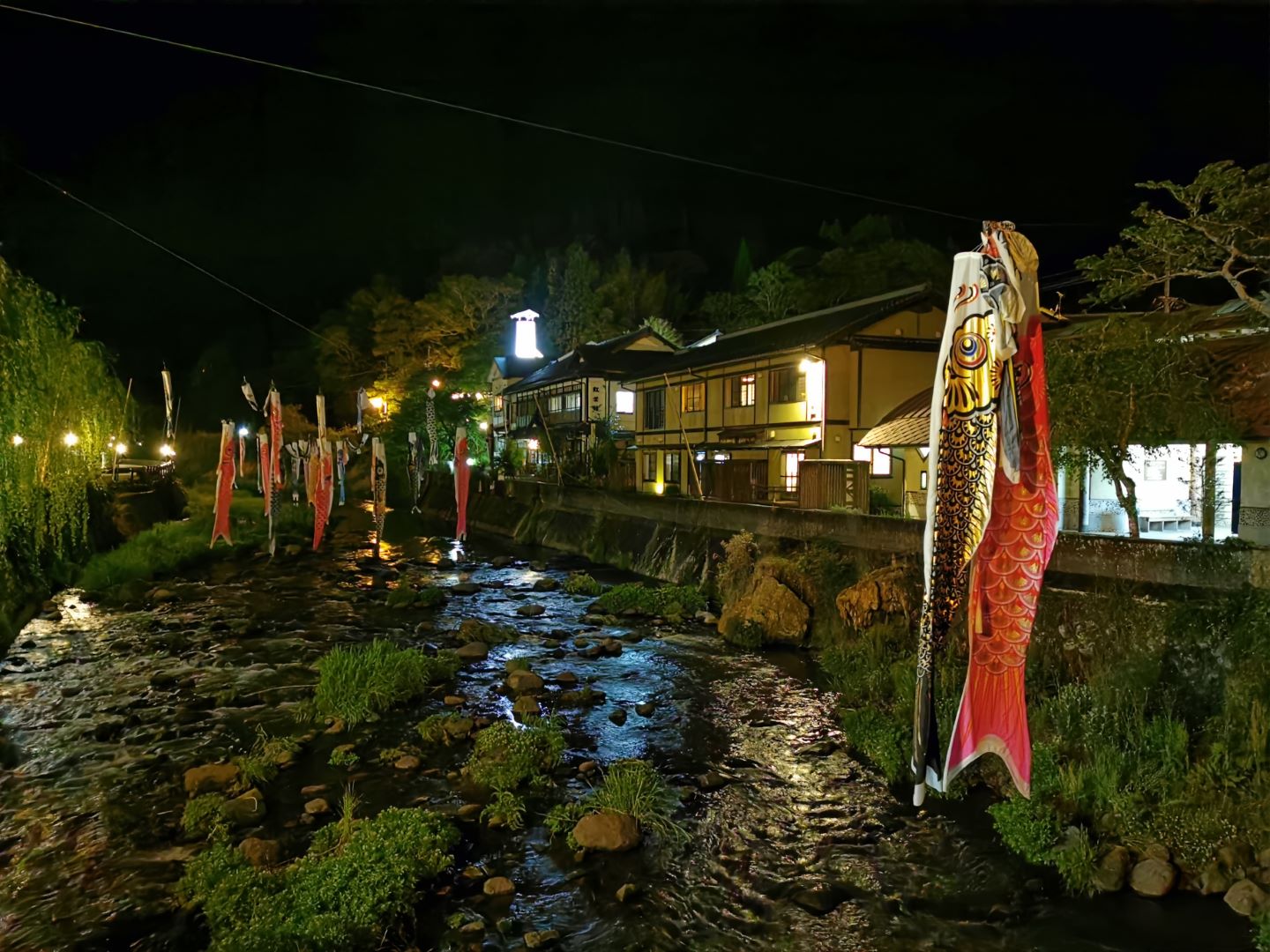
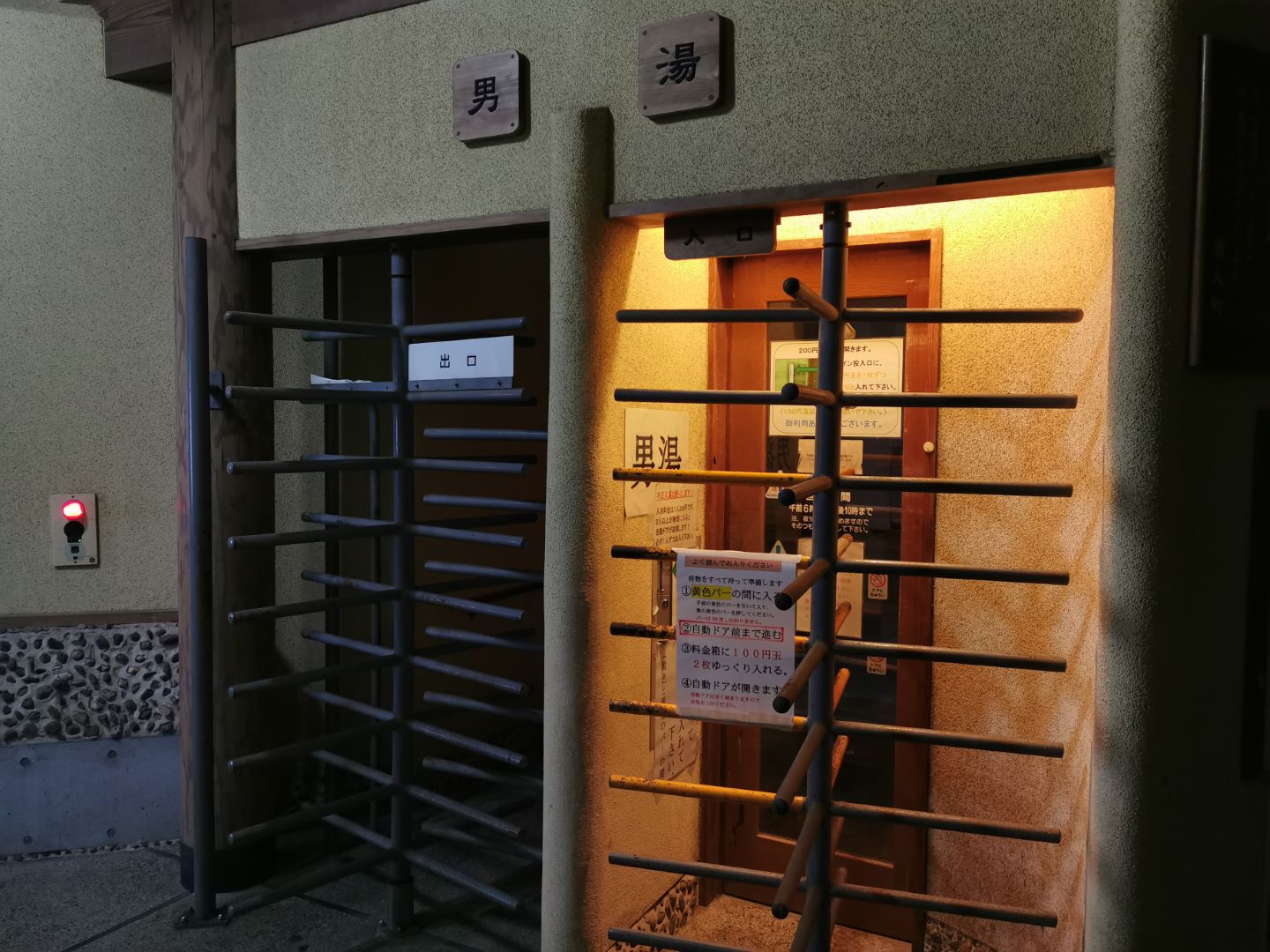
During this time, colorful koinobori (carp streamers) were hanging by the river behind Chōsei-yu, creating a pleasant atmosphere. Since it was nighttime, the bathhouse was empty. However, I hesitated at the entrance. Although there was a revolving door, I wasn’t sure if I might enter. Upon closer inspection, I saw a spot to insert money behind the revolving door. I wasn’t sure whether inserting money would make the door work properly or if something else would happen, but I decided to try. After inserting the required 200 yen, the door slid open. I was relieved to find that the entrance door was actually automatic.

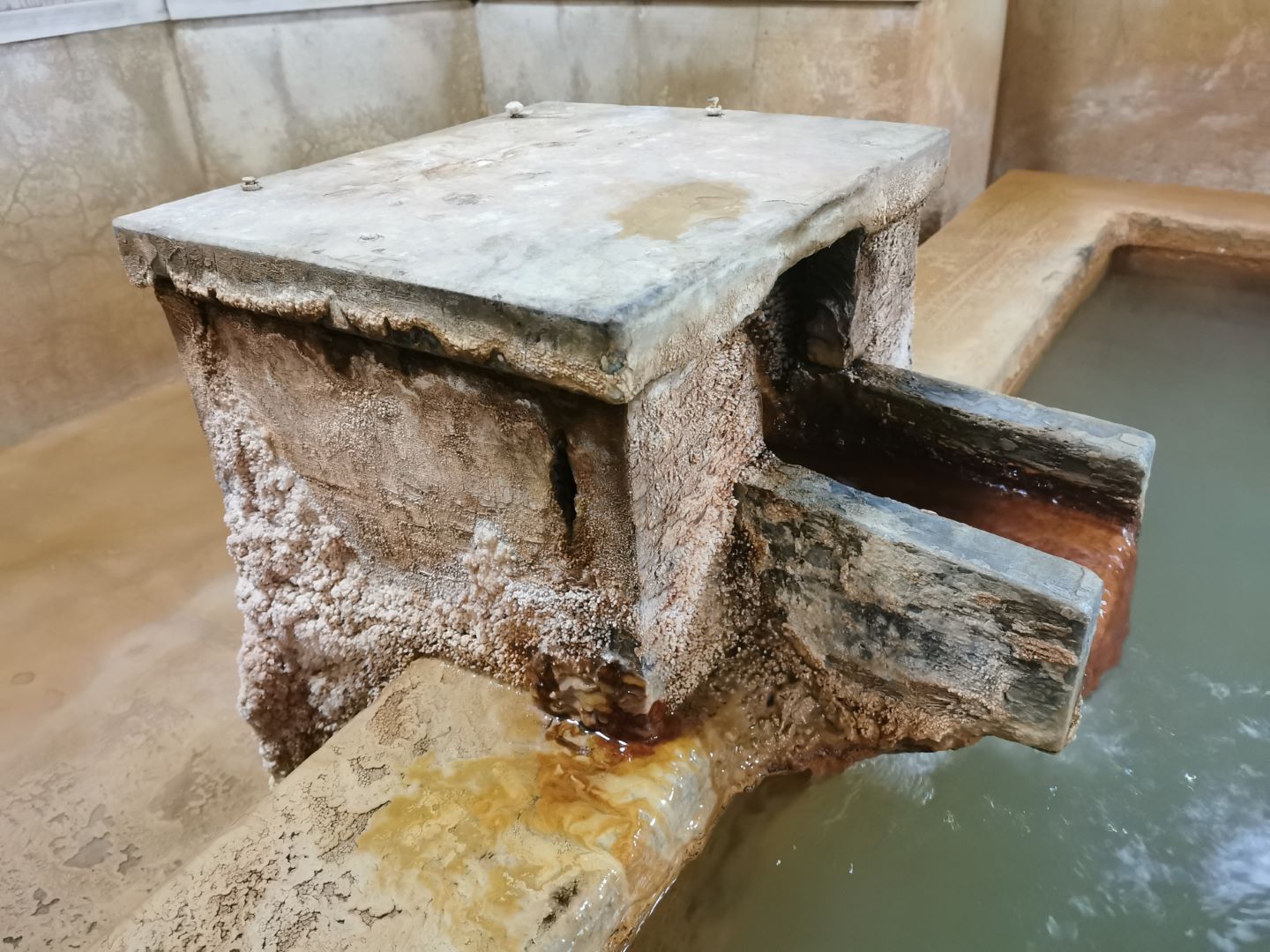
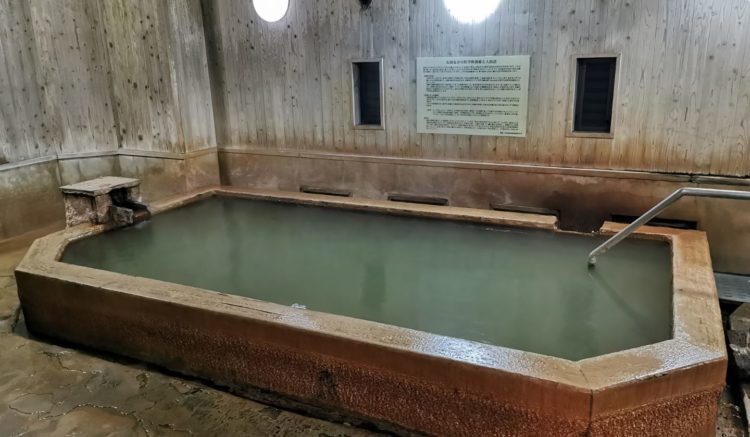
Chōsei-yu’s source water is a bicarbonate mineral spring with a temperature of 48°C, which is a bit hot for a carbonated spring. The high concentration of carbonation is clearly visible in the ingredients. The bath is filled with dark brownish-green water, and there is significant mineral deposit buildup around the faucet and on the floor, indicating the strength of the hot spring’s minerals. The bathhouse smells strongly of iron. Since drinking the spring water is recommended at Nagayu Onsen, I decided to try it, but it didn’t taste very good. I had expected bubbles on my skin, like in some other carbonated springs, but the slightly higher temperature meant I didn’t feel any foam. However, I could still sense mild carbonation when drinking it.
The water had a slightly clingy texture on my skin, and it felt rough when I scrubbed my skin. I spent quite a bit of time entering and exiting the bath, enjoying the warm onsen water thoroughly.


On the opposite side of the river from Chōsei-yu is Yōkōin Yakusendo, which has a drinking fountain for the spring. Near this, there’s also a sign indicating that the medicinal bath salts “Kiki-yu” made by Tsumura are based on Nagayu Onsen’s spring qualities. Despite the high temperature of the source, the spring contains a high concentration of carbonation, which is why Kiki-yu was developed and commercialized based on this spring’s mineral composition.
Nagayu Onsen has an old-fashioned hot spring town atmosphere, but there are also sophisticated ryokan and hot spring facilities like Ramune-no-Yu. Due to its sister-city relationship with the German spa town of Bad Kreuznach, there is a European-style public bathhouse called Gozen-yu, creating a unique townscape that’s fun to stroll through. Next time, I’d love to stay here for a few days and enjoy it more leisurely.