
Strolling around Zurich city
I had known for a while that I had a business trip over the weekend, so I started looking for cheap flights that would allow me to leave early Saturday morning and return Sunday night. I found out I could go to Zurich, Switzerland, so I booked it right away. At Zurich station, I finally felt the “Swiss vibe” when I saw the MONDAINE clock. Despite the less-than-ideal weather, I decided to wander around and explore the city.


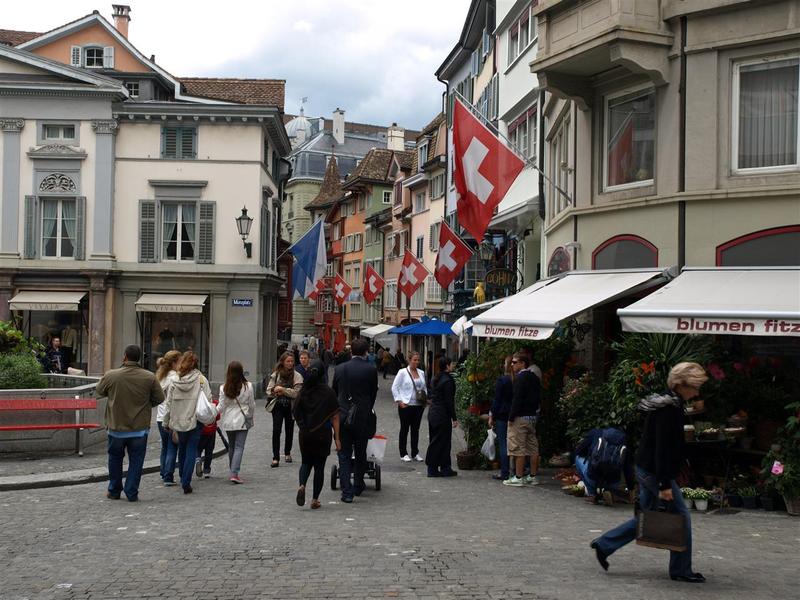

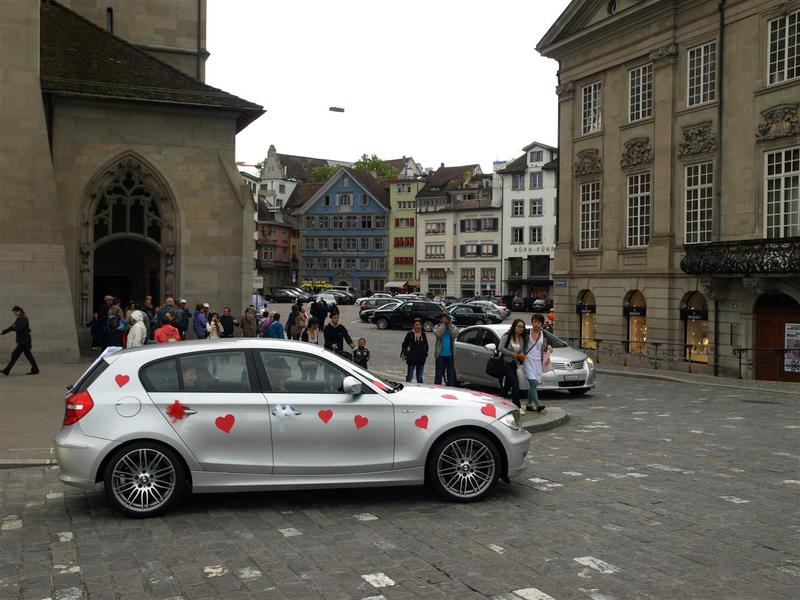
The main street stretching from the central station to Lake Zurich is Bahnhofstrasse. Trams run along it, giving it a stylish vibe, but it doesn’t feel all that different from other European cities. It’s mainly the Swiss flags here and there that remind me I’m in Switzerland. One thing I found interesting was a sauna by the river. It’s pretty amazing to have such a lovely sauna right in the middle of the city – I’m a little jealous 🙂


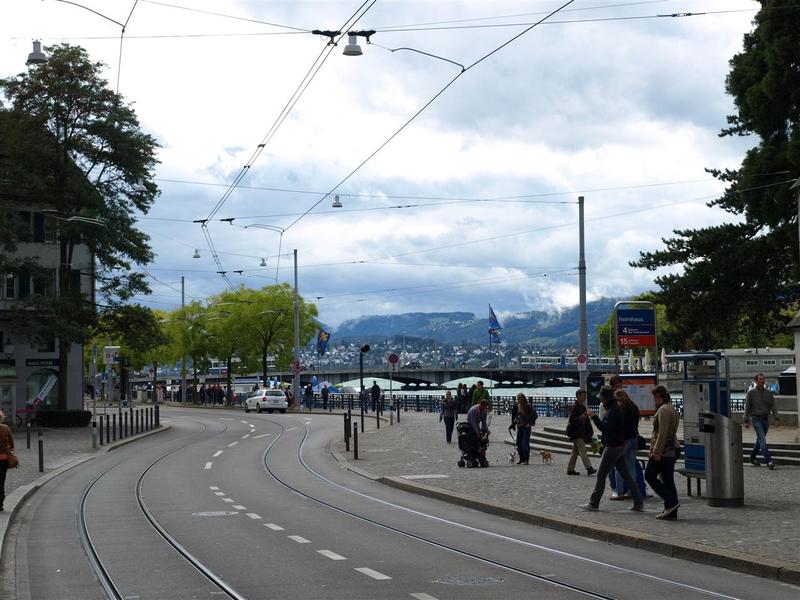
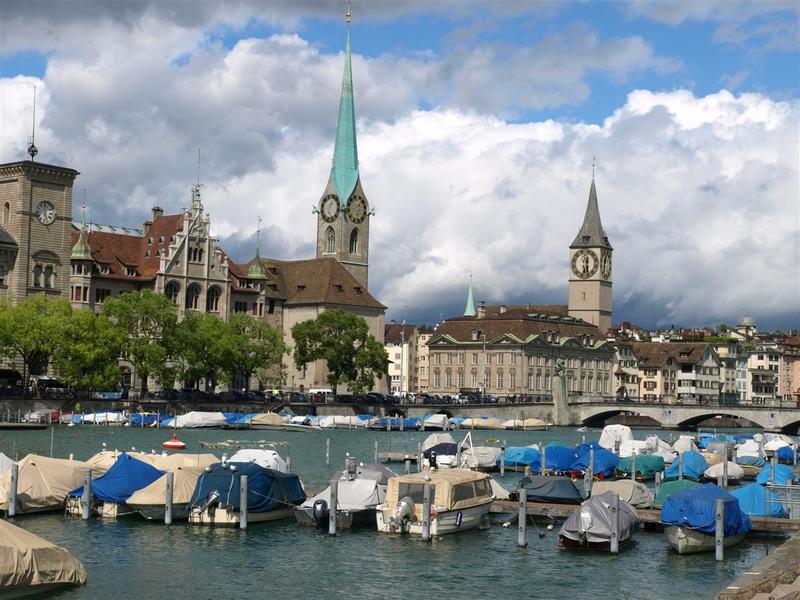

It seems that in Zurich, you can get around quite easily just using the trams, which is very convenient. The combination of European cityscapes and trams really goes well together. As I wandered around, the sun started peeking through the clouds occasionally, which lifted my mood a bit. This was especially welcome because, even though it was late August, it felt quite chilly – almost cold – when the sun wasn’t out.


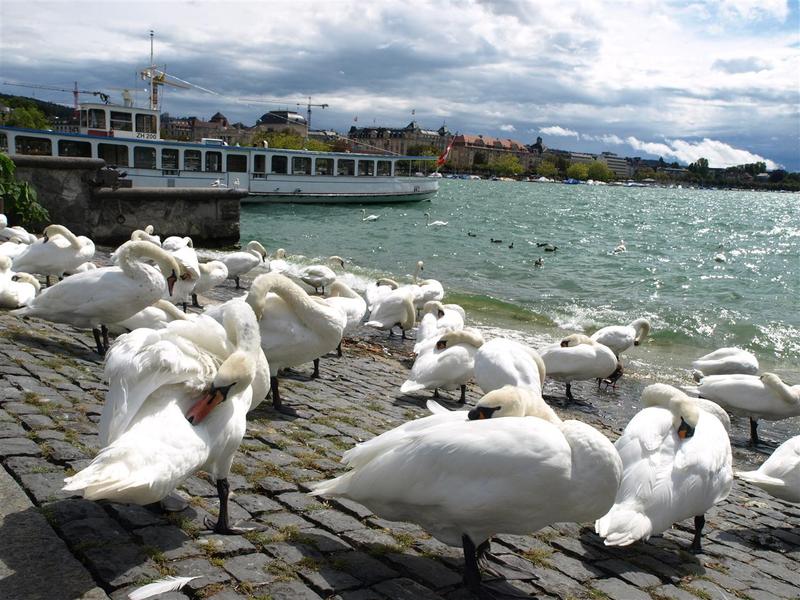
When I reach the end of Bahnhofstrasse, I arrive at Lake Zurich. It’s a beautiful lake with emerald-green water, and sightseeing boats leisurely cross to the other side. That day, it felt too cold, and I had a place I really wanted to visit afterward, so I skipped the boat ride. Still, the moments when the sun broke through the clouds were truly refreshing. If I had visited during a hotter part of summer, I think I might have given in to the temptation to take a ride.

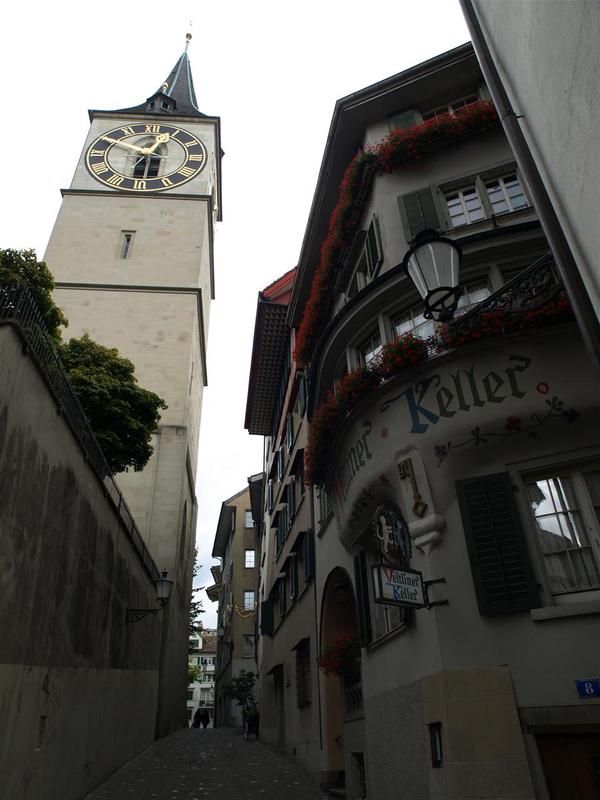


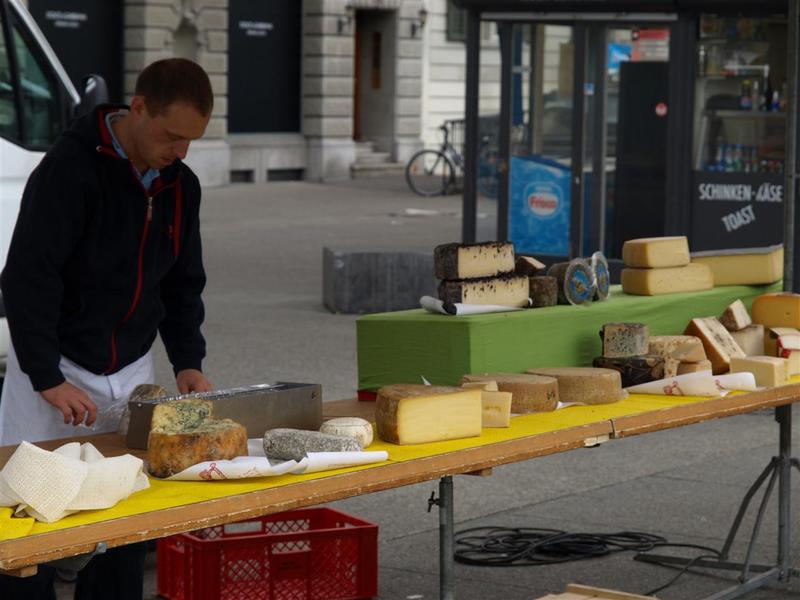
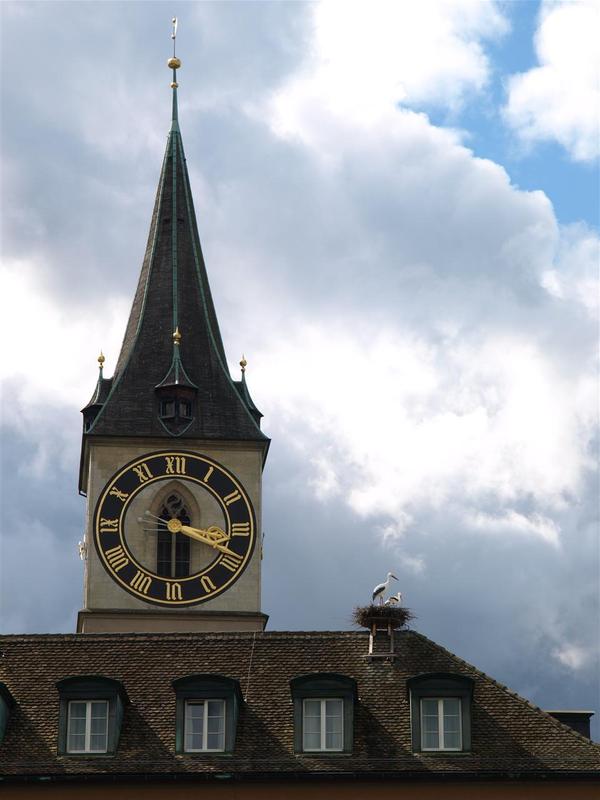
The church in the photo is St. Peter’s Church, the oldest church in Zurich. Its clock tower has a face with a diameter of 8.7 meters, reportedly the largest in Europe. It’s certainly very big, and you can see it from many parts of the city, which is quite handy. At the local market, I saw cheese for sale – it looked incredibly delicious.


While wandering aimlessly through the city, I came across some charming little shops here and there. Unfortunately, this particular shop was closed on Saturday, but it seemed to specialize in handmade wooden toys. There were a few delightful toys displayed in the shop window. Another shop, with an adorable sign, also focused on wooden toys. Stepping inside, I couldn’t help but want to pick up and play with the various toys. It was the kind of shop where I felt like I could spend hours if I had the time.


Zurich has small fountains like this one all over the city, and I saw locals casually drinking the water. The river and Lake Zurich are also incredibly clean, which made me feel that this city is truly blessed with abundant, pristine water. I knew Zurich was a major gateway to Switzerland, so I had imagined it to be a larger metropolis. However, I found it to be a charming city with a compact size and well-preserved medieval atmosphere. It’s truly a lovely place.
At Le Corbusier House (Heidi Weber Museum)
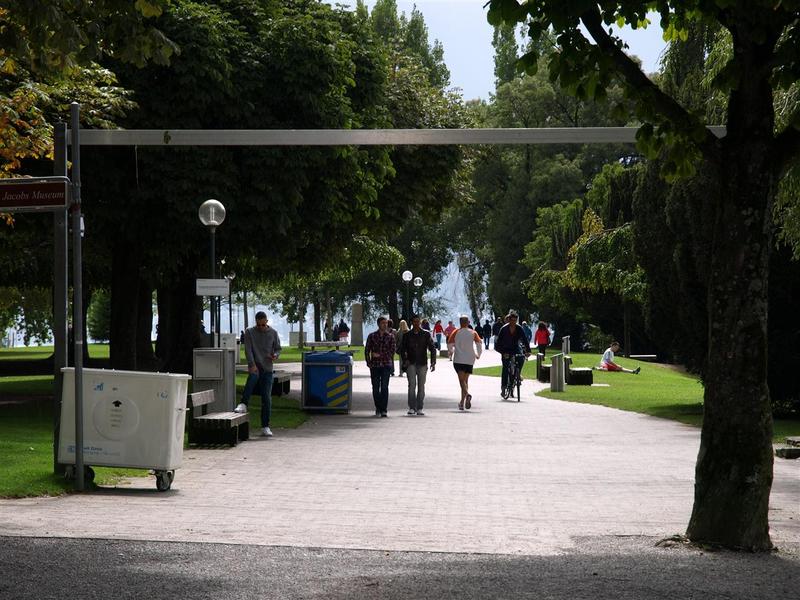


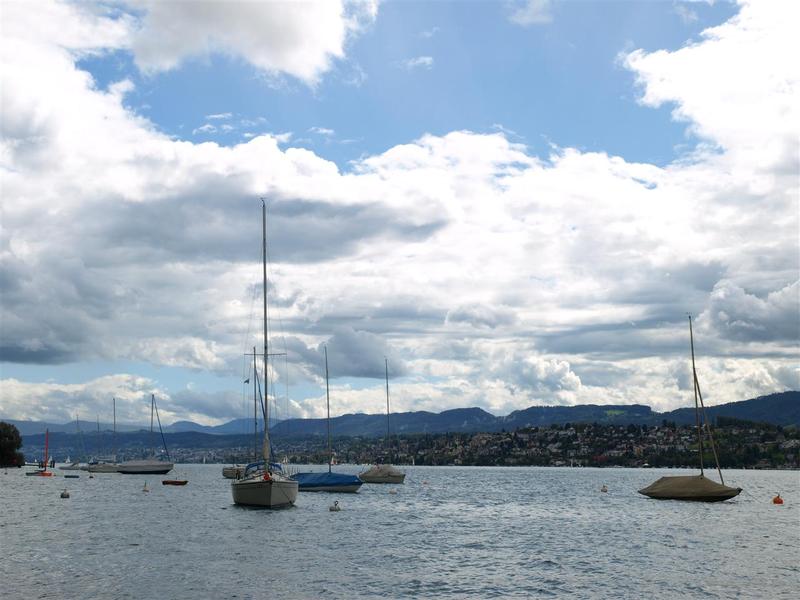

In a residential area overlooking Lake Zurich, you’ll find the Le Corbusier House, a museum dedicated to the works of Le Corbusier, a name that any fan of design and architecture would surely recognize. This was one of the places I was determined to visit during my short stay. Considering it’s only open for limited hours on summer weekends, I felt incredibly lucky to be able to visit.
Although you can reach the Le Corbusier House by tram, I chose to take a leisurely walk along the beautiful lakeside instead, as it was within walking distance. The house is situated by the lake, surrounded by a park, and there seemed to be a water taxi service as well. Walking through such a stunning area, I couldn’t help but think how amazing it would be to live in a place like this, even just once. Eventually, I reached a distinctive building with vivid primary colors that stood out beautifully against the green lawn.
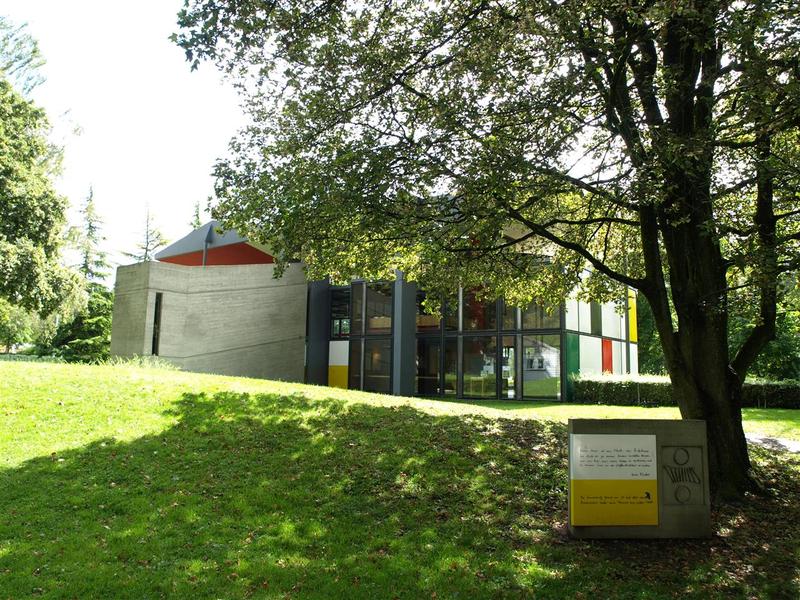


The museum opened at 2:00 PM, but I arrived a little early, so I took a walk around the building. The blue sky, green lawn, vivid wall colors, and the building’s unique aesthetic made for a truly stunning sight. Having this masterpiece all to myself for a while felt like such a luxurious moment. Even after it opened, I was the only visitor at first, so I took my time admiring Le Corbusier’s paintings, architectural blueprints, various posters, and poetry.
Then, an older woman approached me and asked, “Are you an architecture student?”
When I replied, “No, I’m not an architecture student – I’m a software engineer,” she looked a bit surprised. She explained, “Most people who visit here are architects or students aspiring to be one.” It turned out she was Heidi Weber, the owner of the Le Corbusier House. Interestingly, while the guidebook referred to the building as Le Corbusier House, on the map it was labeled as the Heidi Weber Museum, which initially made it a bit hard to find.


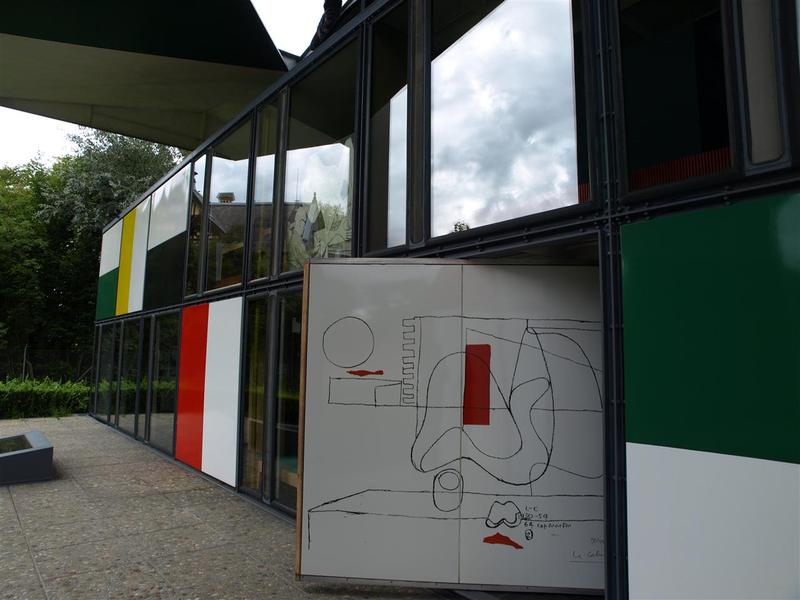
According to Heidi Weber, she had worked with Le Corbusier for seven years, and she spoke not only about his remarkable talents in architecture, painting, and poetry, but also about what a truly outstanding person he was, both as a professional and as a human being. The Le Corbusier House was designed by Corbusier to display Heidi Weber’s collection, but sadly, he passed away before seeing its completion.
What surprised me was that, while Heidi Weber greatly admired Corbusier’s architectural brilliance, it was his talents in painting and poetry that had a deeper impact on her. Although it was by chance, I had the opportunity to hear many fascinating stories, and it turned out to be an incredibly precious and meaningful time.
To the spa town of Baden, located on the outskirts of Zurich

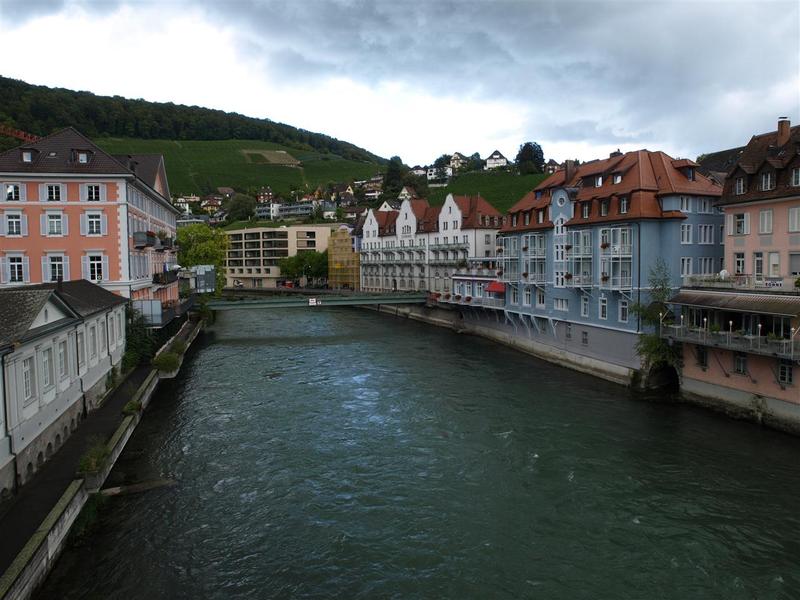
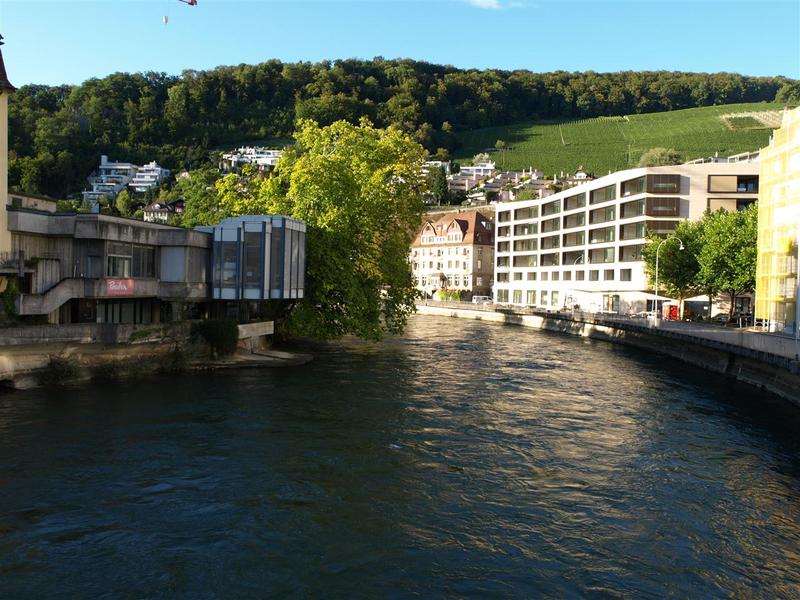
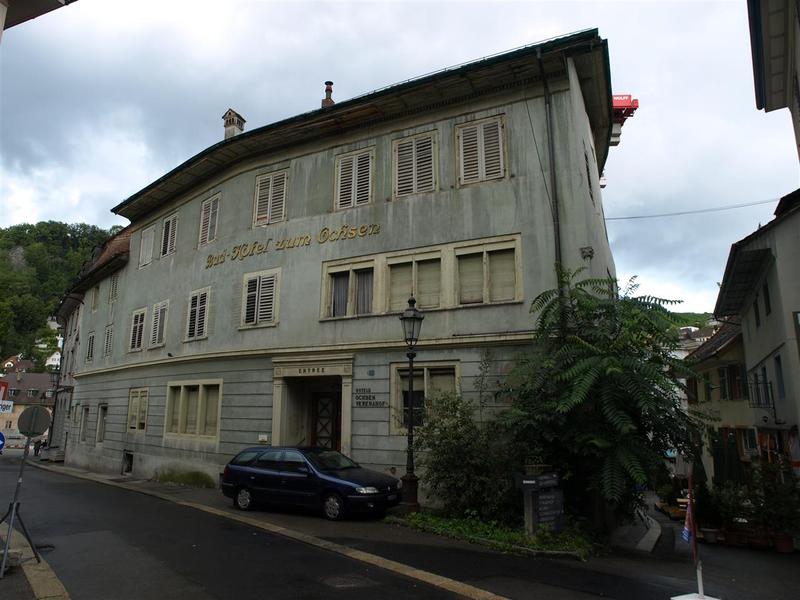
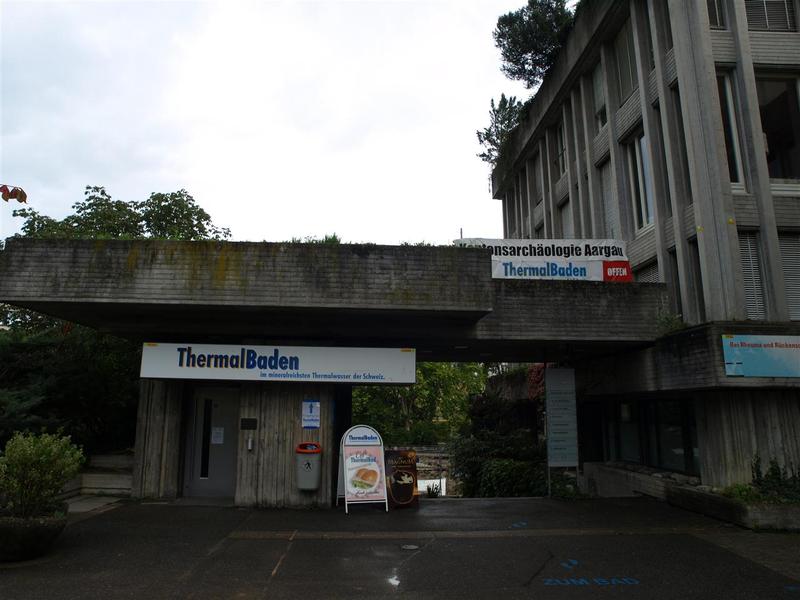
Just a 30-minute train ride from Zurich, there is a small spa resort called “BADEN,” which also has a spa center open to visitors. Since I wanted to warm up my cold body, I left the Le Corbusier House and headed there right away. When I saw the spa town along the river, it reminded me of Karlovy Vary in the Czech Republic, which I visited about three years ago. Just as Japanese hot spring towns have a certain familiar atmosphere, I feel that European spa towns also have their own unique charm.
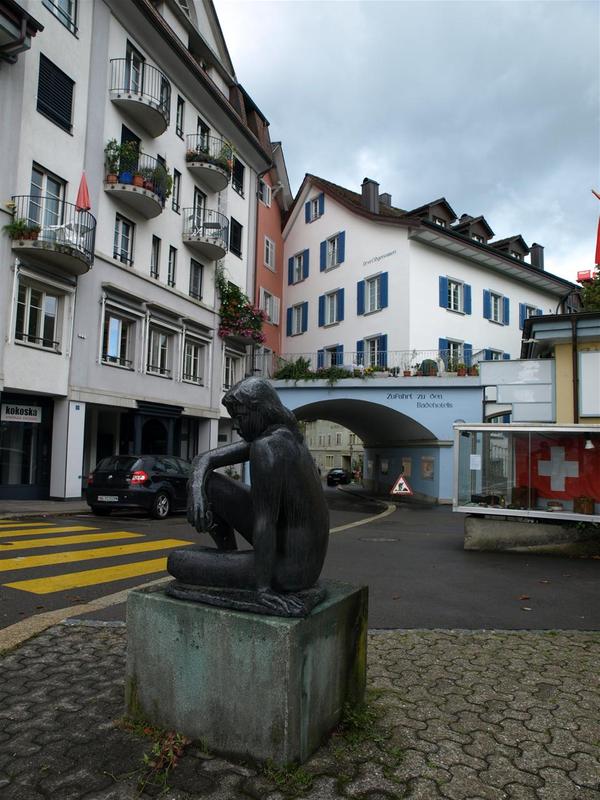
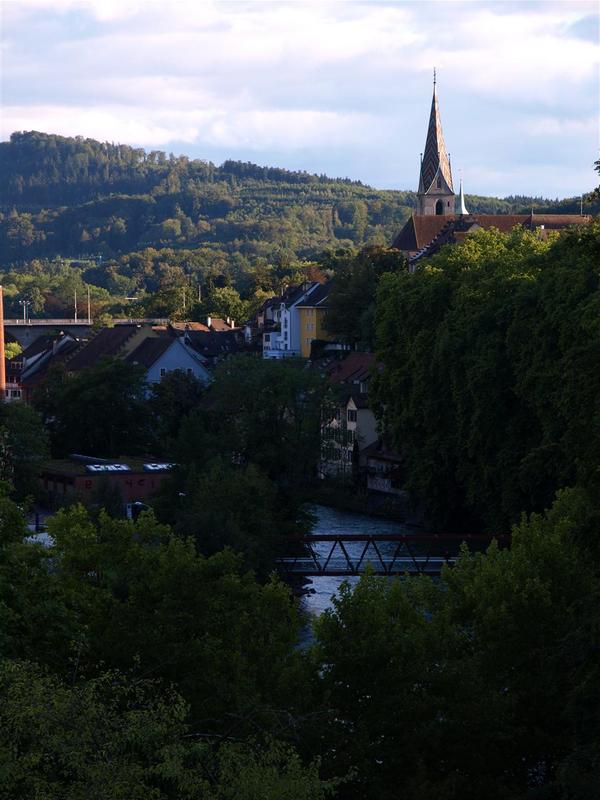


I decided to try the ThermalBaden, which had a vibe that seemed welcoming to visitors. It was like a hot spring pool where you wear a swimsuit, with both indoor and outdoor pools. The water was colorless and odorless, so for a moment, I thought, “Is this really a hot spring!?” However, in areas where the water was overflowing, there was a lot of buildup of minerals, so I started to feel that the water might actually be quite rich in minerals. The temperature was around 36°C, so it was pleasantly lukewarm. I spent about 1-2 hours just relaxing in the water, lying down in the bath, occasionally swimming, or walking around in the water – just taking it easy. It was a pretty enjoyable experience.
Interestingly, during the festival that was taking place that day, a rock band was singing “Nada Sou Sou” in Japanese, which was a surprise!
To Rigi


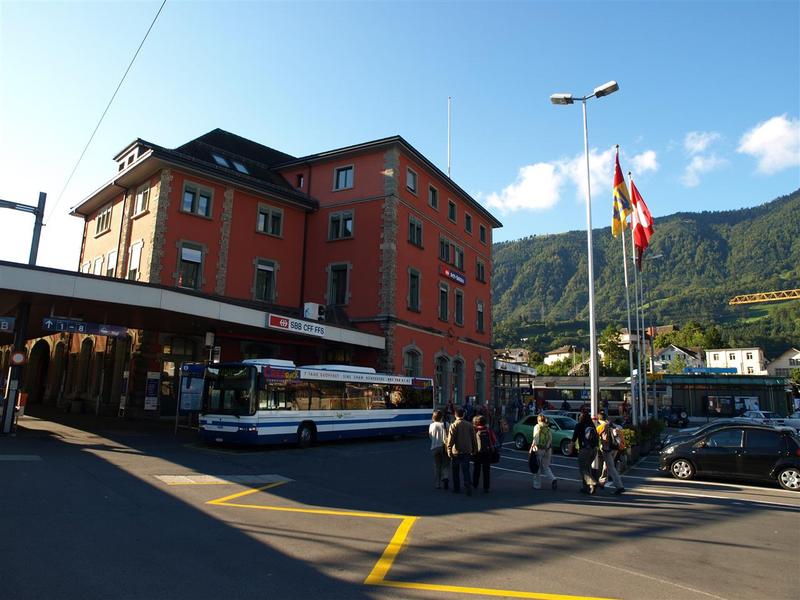

Since I was expecting the weather to be less than ideal over the weekend, I had loosely planned to take a leisurely stroll through Stein am Rhein, a small town where you can enjoy a boat ride along the Rhine. However, as the weather seemed to be clearing up, I thought it would be a great opportunity to take a mountain train and enjoy some quintessential Swiss scenery. After some research, I discovered that there was a spot where even someone in light attire like me could easily enjoy hiking while taking in the beautiful Swiss landscapes.
Mount Rigi, with an elevation of 1,750 meters, is said to be the site where Europe’s first mountain railway was built in 1871, which helped showcase the stunning Swiss Alps as a tourist destination.
The journey started from the central station, where many trains with a striking red color (which is so characteristic of Swiss design) depart. I was headed to Arth-Goldau, from where a blue mountain train would take me all the way to the top of Mount Rigi. The station for the mountain railway was a bit farther from the Swiss Federal Railways station, but it was located in a lovely spot with a beautiful church in the view. It was exciting!


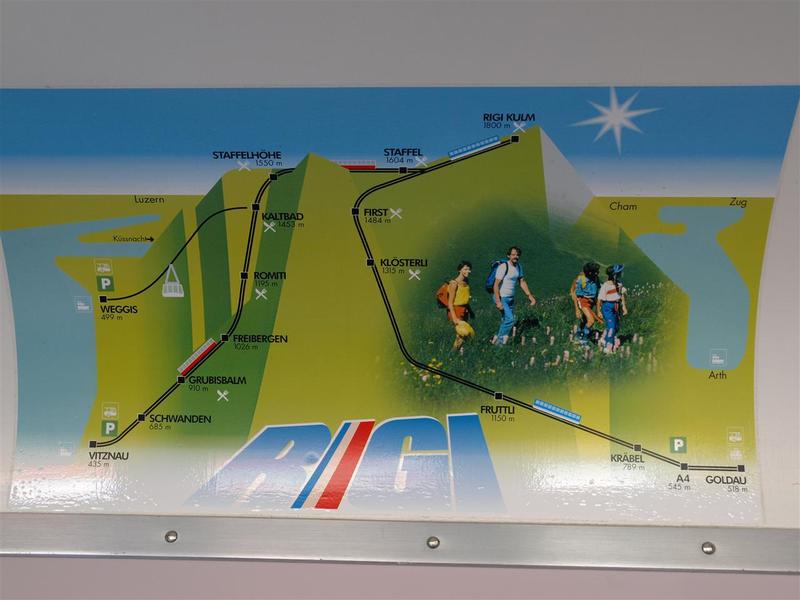

In the center of the tracks, there is an additional rail with gears that helps the train climb the steep incline. The two-car mountain train was fairly crowded, though the rear car seemed to be reserved, and everyone managed to find a seat. As shown in the illustration, Mount Rigi can be accessed by the blue mountain train, the red mountain train, or a cable car. My plan for the day was to take the blue mountain train all the way to the summit, then hike down along the red mountain train tracks to the lakeside town of Vitznau. From there, I would take a boat along the lake to Luzern, the fourth largest city in Switzerland.


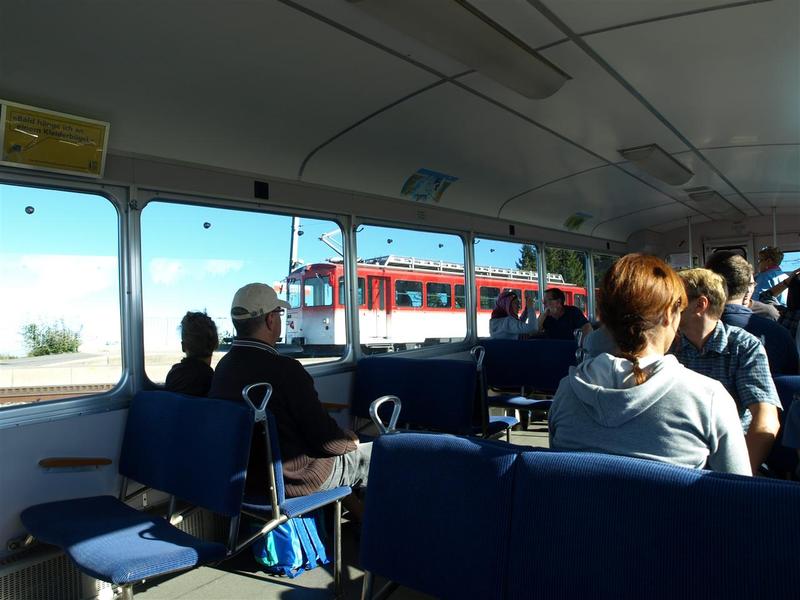
The mountain train climbs slowly but steadily, gaining altitude with strength. The view from the window is truly breathtaking. At the beginning of the ascent, the landscape is filled with beautiful green meadows, and as we go higher, the peaks, covered in pure white snow, come into view. It’s hard to believe that just an hour ago, I was in the bustling city of Zurich. After merging with the red mountain train coming from the opposite side of Arth-Goldau, we were just moments away from reaching the summit of Mount Rigi.


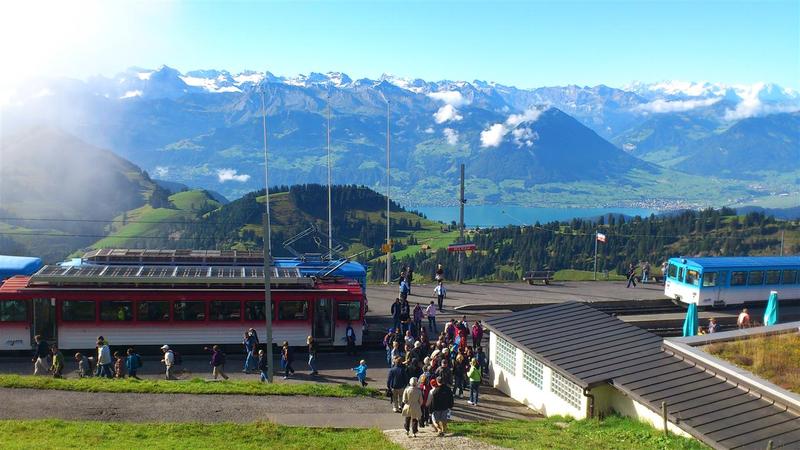

When I got off the mountain train, I was greeted by the intense summer sunlight and a refreshing cool breeze, which made me take a deep breath. Just above the station stands a historic hotel that opened in 1816, and right behind it is the summit, where you can enjoy a 360-degree panoramic view. An older man sitting next to me on the train had kindly told me to be sure to visit the summit, and I was excited to do so.

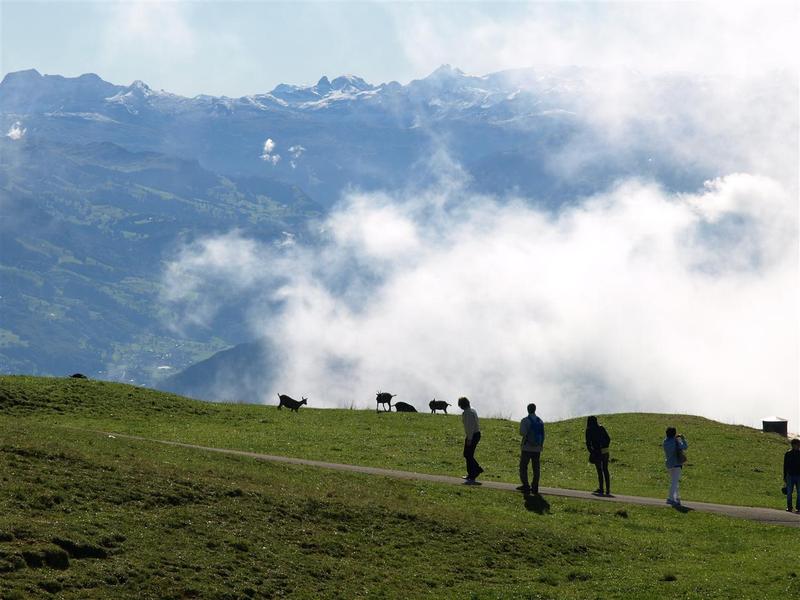

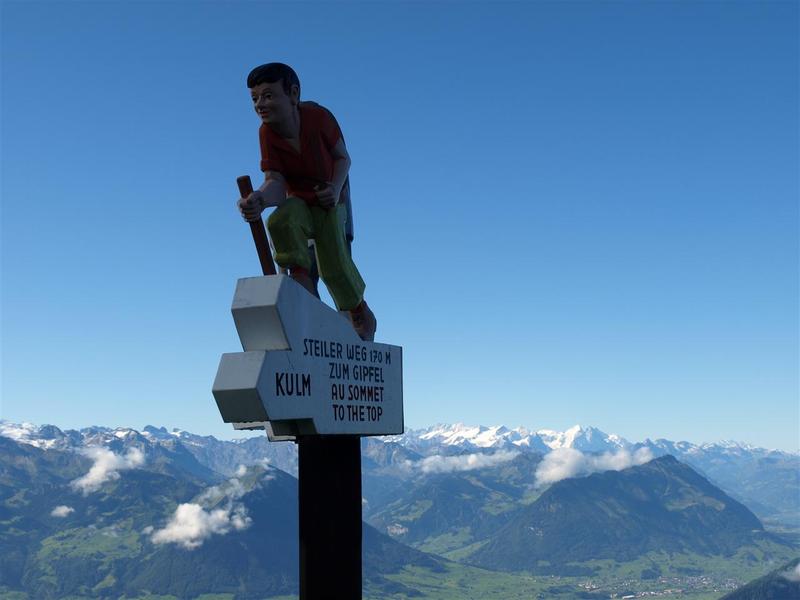
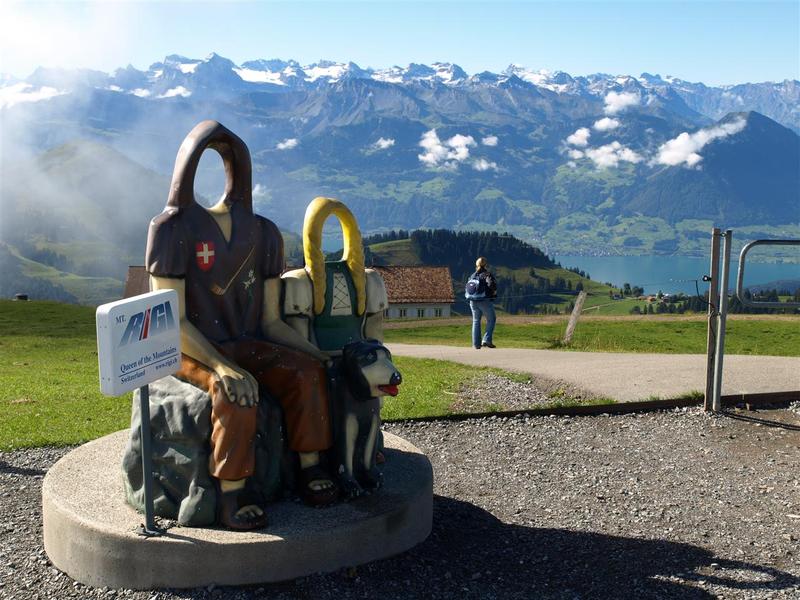
The view from the narrow path leading from the station to the summit was absolutely stunning. It was so relaxing to watch the clouds rise from below, and the 200-meter path felt like it took much longer to ascend, as I took my time enjoying the scenery.

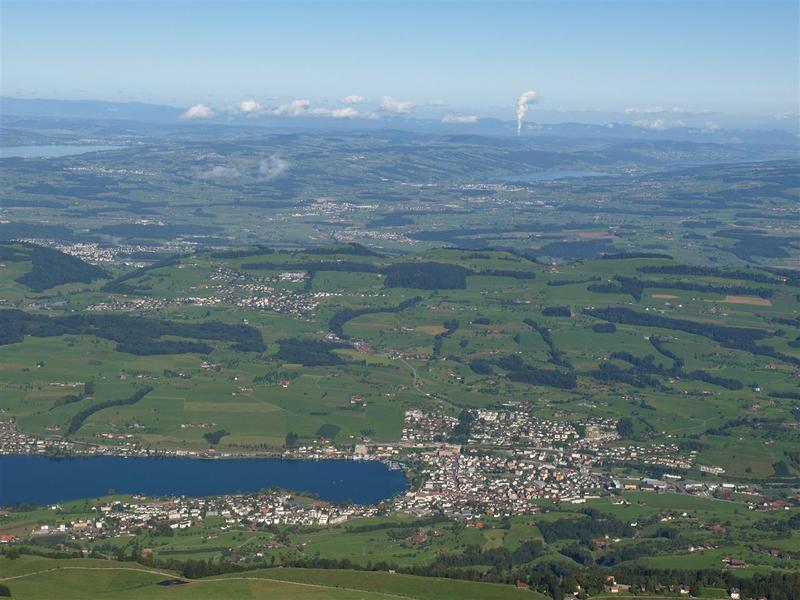


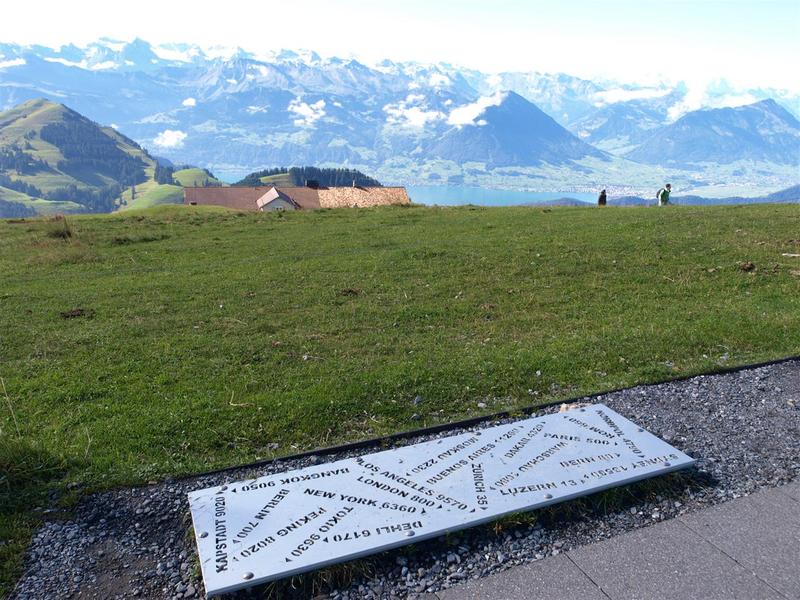


Mount Rigi is surrounded by lakes like Vierwaldstättersee and Zugersee, and with no high mountains obstructing the view, the summit offers a truly 360-degree panoramic view. In one direction, you see the beautiful lake surface and the gently rolling landscape around it; in another, you see steep cliffs with clouds rising from below; and in yet another direction, there are mountains covered in eternal snow. The scenery changes completely depending on the direction you look. Every view is picture-perfect, but capturing its beauty fully in a photo is still a challenge…
From the summit of Mount Rigi to the lakeside town of Vitznau

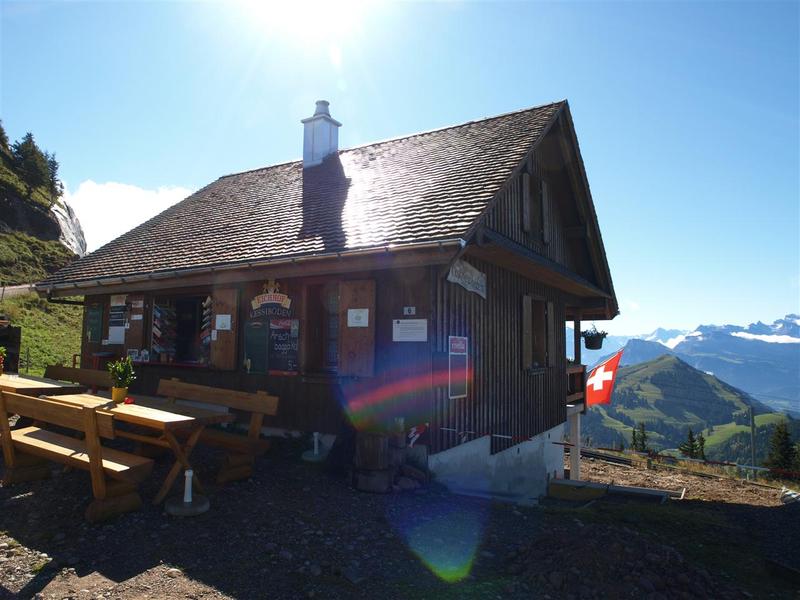
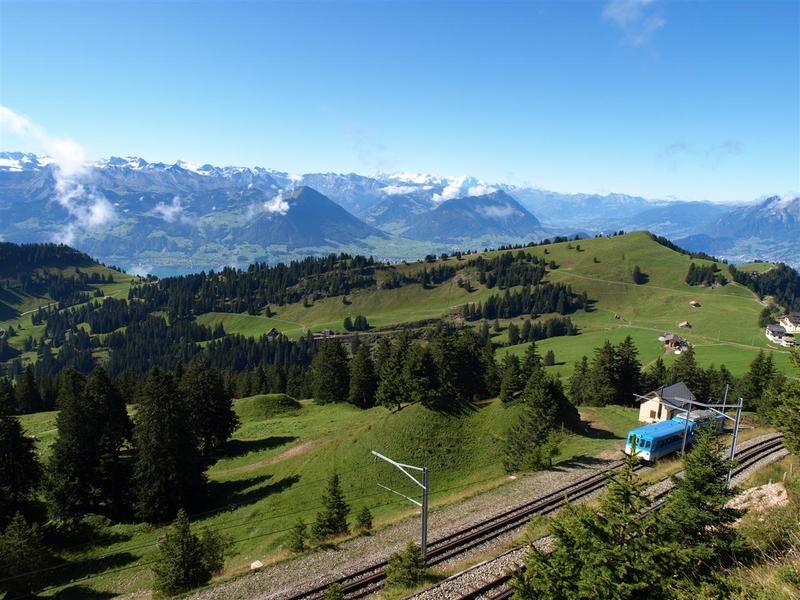
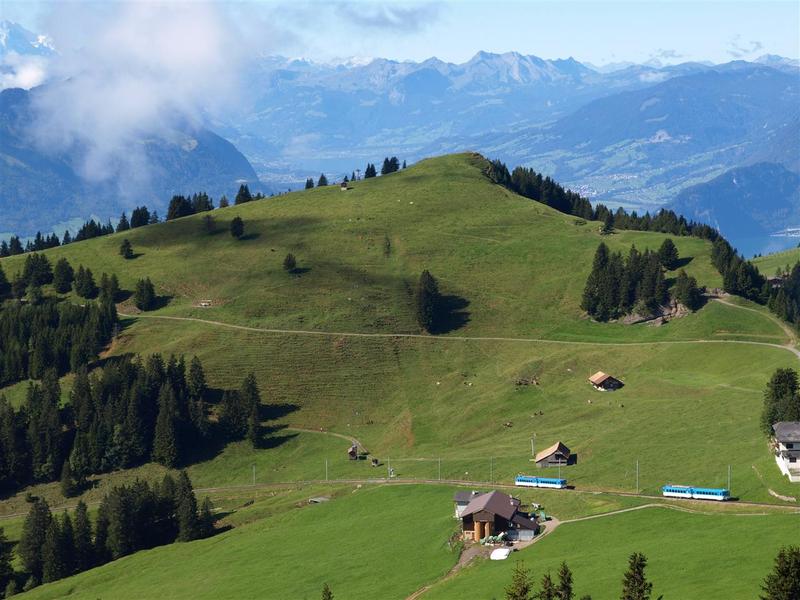

After thoroughly enjoying the views from the summit, it was time for the hike down to the lakeside town of Vitznau. The yellow signs marking the trail were well-placed, so I didn’t have to worry about getting lost. As I leisurely walked, watching the blue mountain train that had brought me to the summit veer off to the left, I noticed the red mountain train coming up. The green meadows, the blue sky, and the red mountain train – it felt like the perfect embodiment of Switzerland.

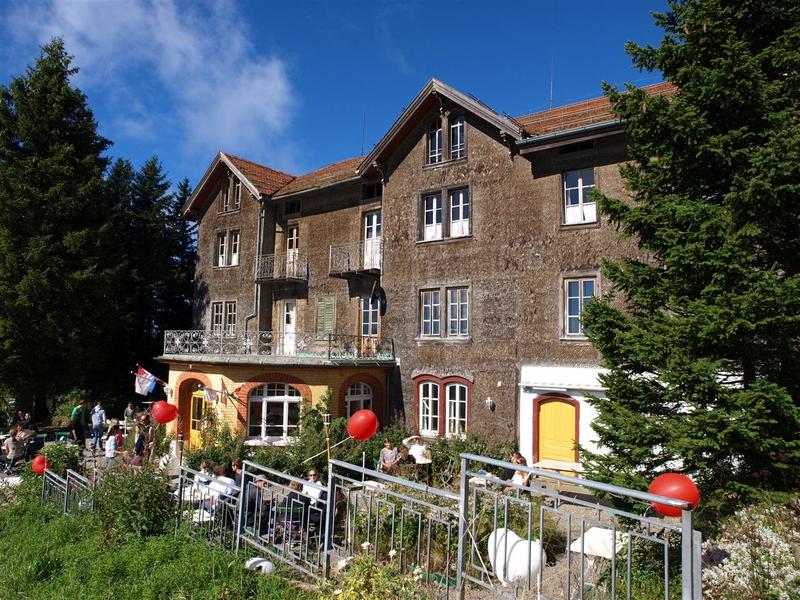

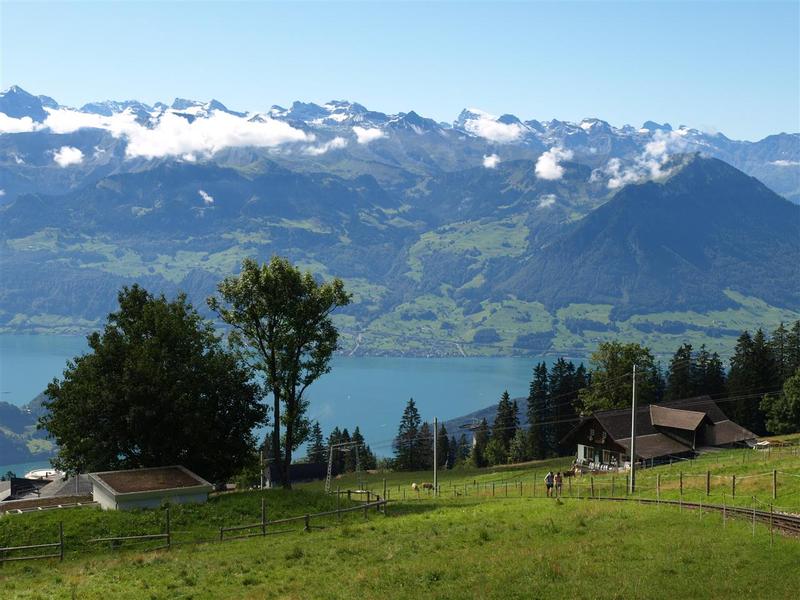
The small hotels around the station had walls that were very striking, almost as if layers of fine wood were carefully glued together. I initially thought the hiking trail to Vitznau would be a straightforward path, but it actually branched off in several places, offering different views and experiences along each route.
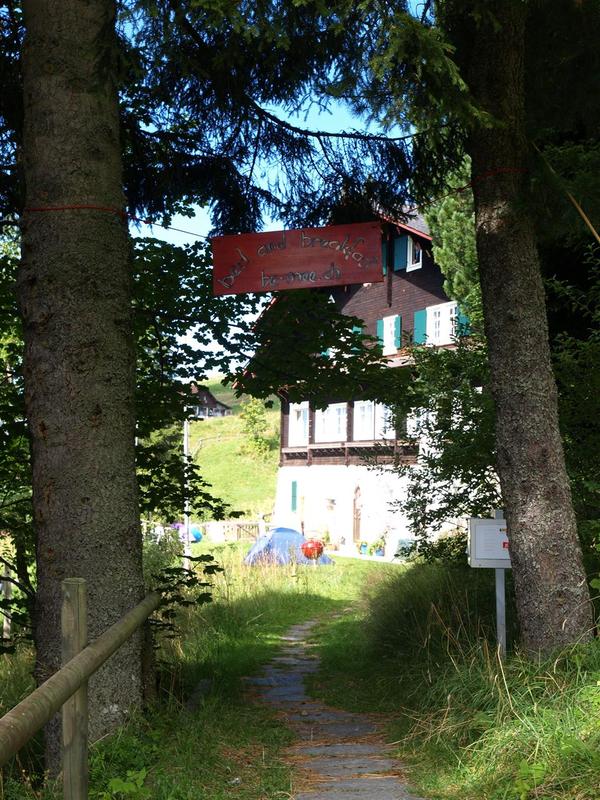


Along the trail, there were several charming B&Bs and small hotels that made me wish I could stay if time allowed. The area around Kaltbad station, where I encountered many people, was the most popular spot. You can also reach this station by cable car from the lakeside town of Weggis, and since many people hike up and down to the summit from here, I imagine there are a few accommodation options available.


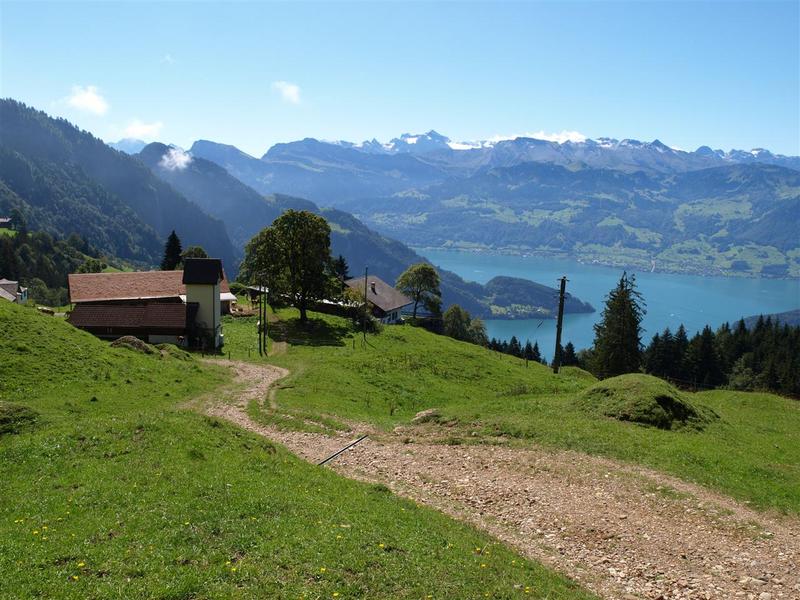


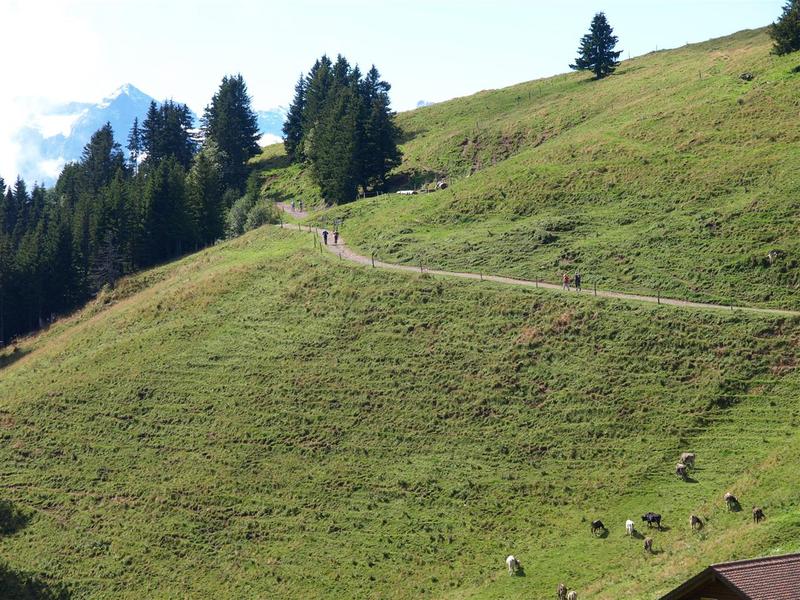
The photo shows the view from Kaltbad to Romiti Felsentor, where the sound of cowbells echoes as the cows leisurely graze on the grass. As I slowly descended through the area, I did wonder a little what I would do if one of the cows came toward me :). This trail seems to be designed in such a way that it passes by the red mountain railway stations, so if you get tired, you can always hop on the train and head down, which is reassuring.
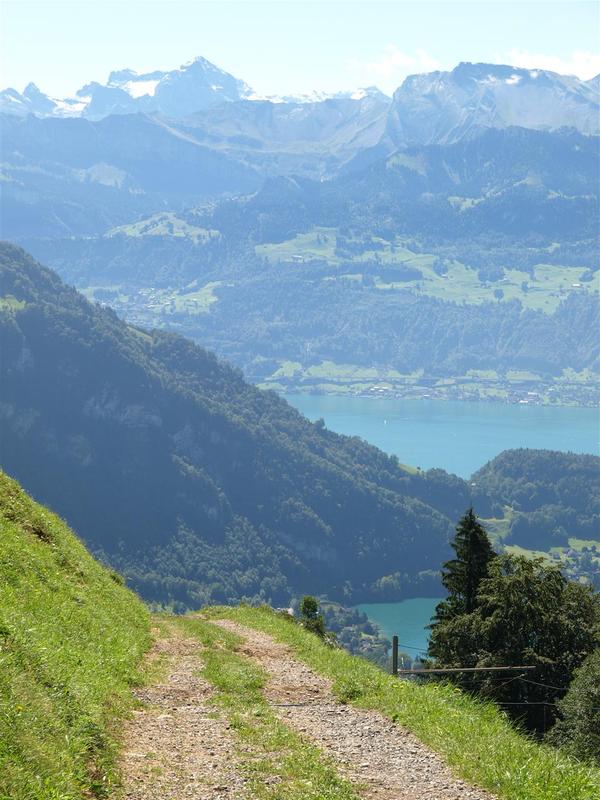


This hiking trail is mostly made up of gravel paths like this, and from time to time, people on mountain bikes come riding down. It seems like the trail is also designed for biking down from the summit, and that looks like it would be a really fun way to experience the area.


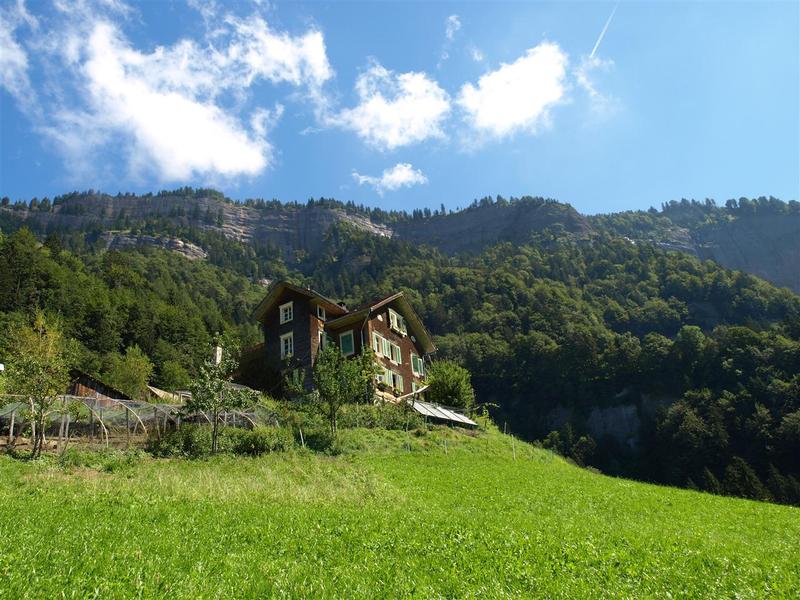


Perhaps because of the type of path, there were also a few people getting off the mountain train midway and starting to climb up toward the summit. As we descended toward the base, the area began to show more pastureland and what seemed like orchards. Around this point, I started to notice charming single-family homes dotted around. That said, it was definitely getting hot.


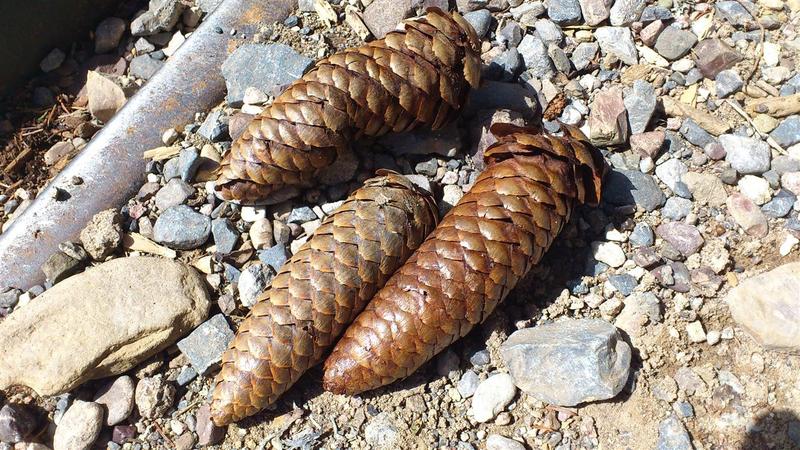
Just a little further to Vitznau, there was a pretty nice eco-hotel in Grusbisbalm.

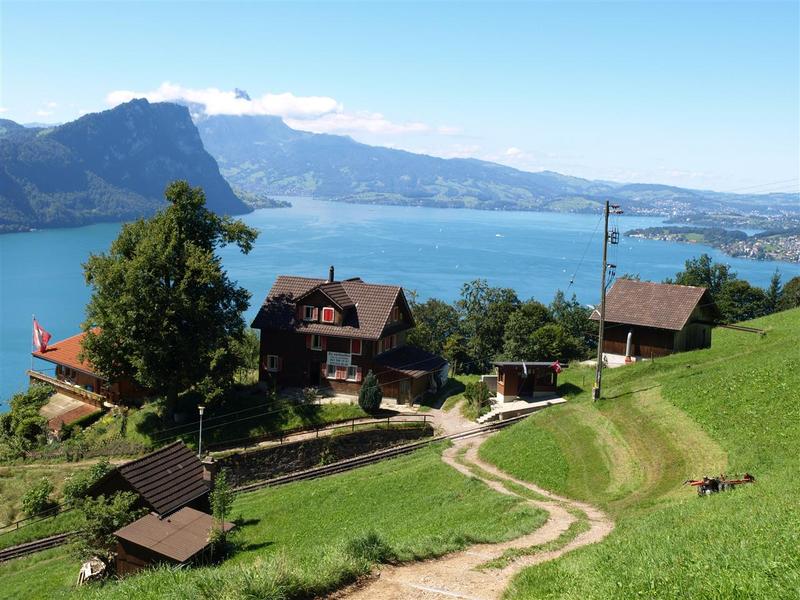
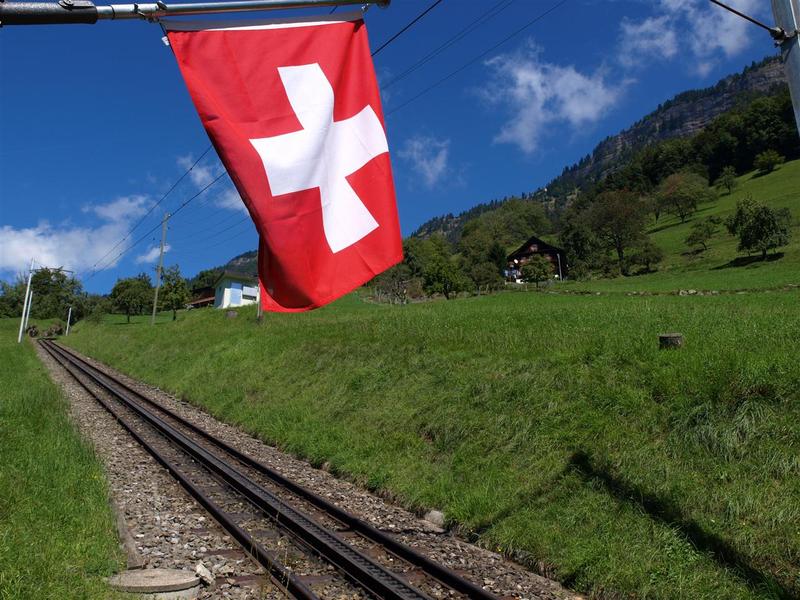
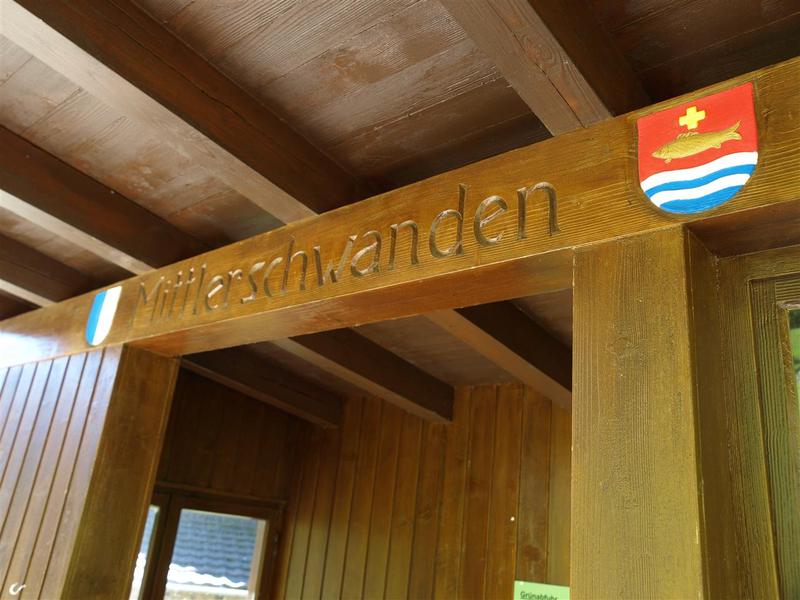

As the lake’s surface expanded more in front of me, I could confirm that a boat was docked at the shore. It seems like the destination, Vitznau, has finally come into view. After nearly two and a half hours of descending on somewhat slippery gravel paths, I started to feel a strange discomfort in my left knee, and pain had begun to set in, so I felt a bit of relief. I spotted a small, charming station called Mittlerschwanden, and after confirming that the next station was Vitznau, the train arrived. The blue sky was so refreshing, and the Swiss flag looked great against it.
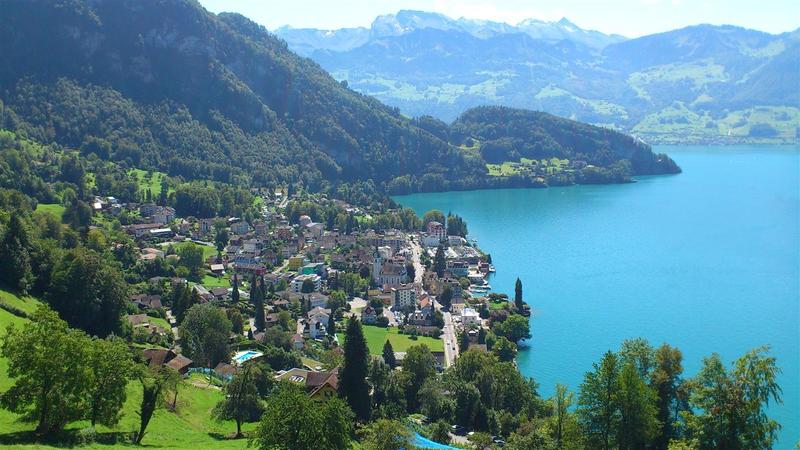
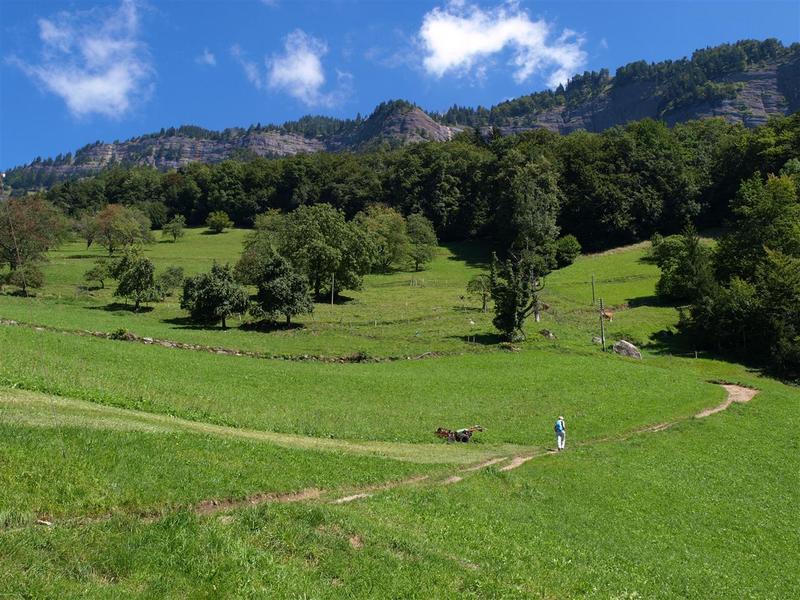
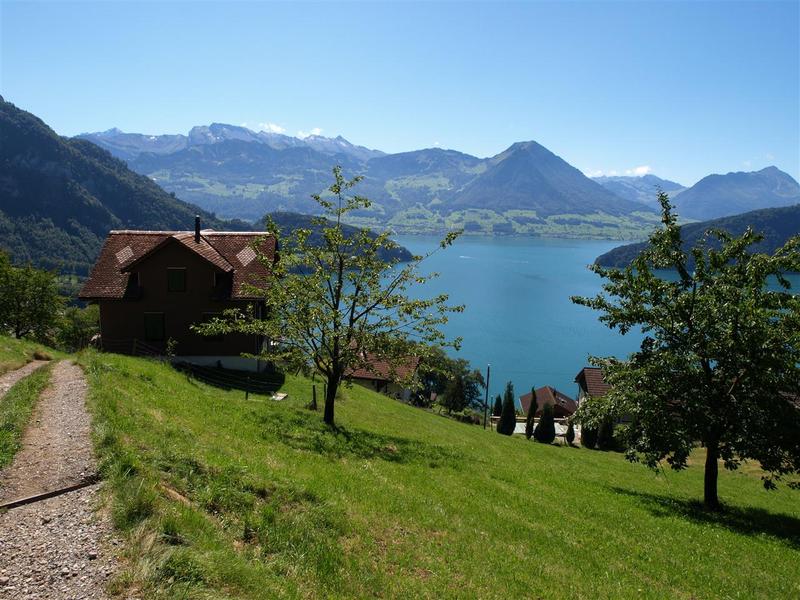


The town of Vitznau came into view, getting much larger in front of me, and from this point, the number of houses started to increase. Even though there is a mountain train, the only path down is this narrow gravel road, so I thought it might be inconvenient. Just then, a 4-wheel buggy came up from behind. It seems that the locals use buggies to travel between here and Vitznau. After about 10 minutes, the gravel path finally ended, and I reached Vitznau. It had taken me about 3 hours and I had descended nearly 9 kilometers.

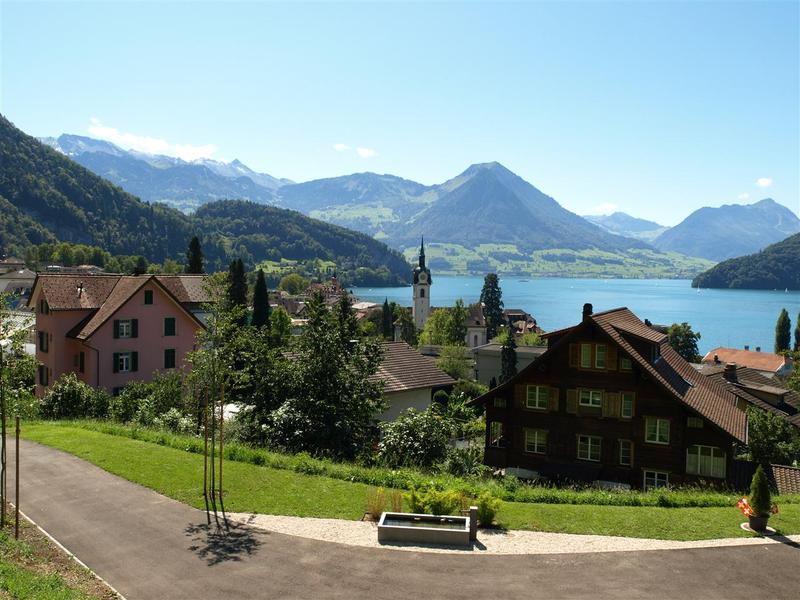


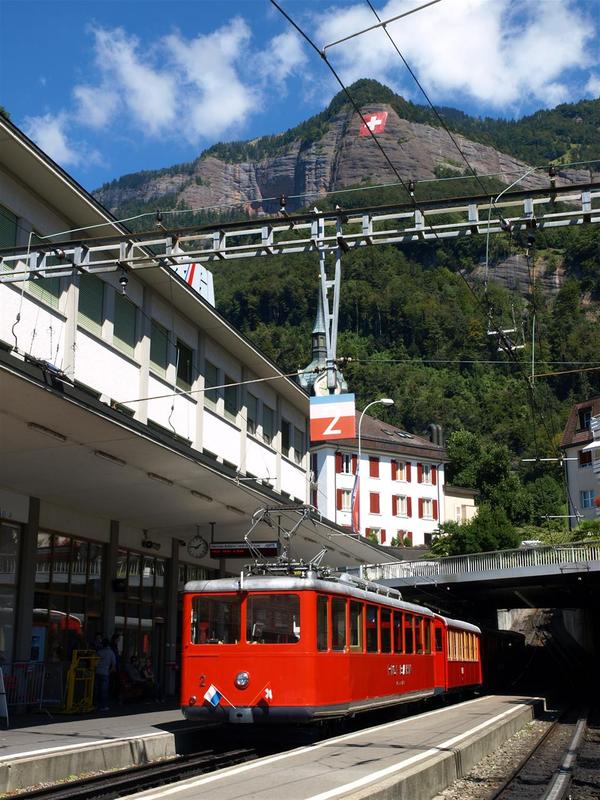
My left knee started to scream after I finished the descent and reached the flat ground. It was just a little further to the pier, but the pain was so bad that I took a break for a while, doing some stretches. The town, though small, was very beautiful, and the pier had many people enjoying the view of the stunning lakeside. There were also a few people sipping beer, making for a pleasant atmosphere. By the way, I was wondering how they managed to attach the large Swiss flag to the rocky cliffs…
Cruising to Luzern

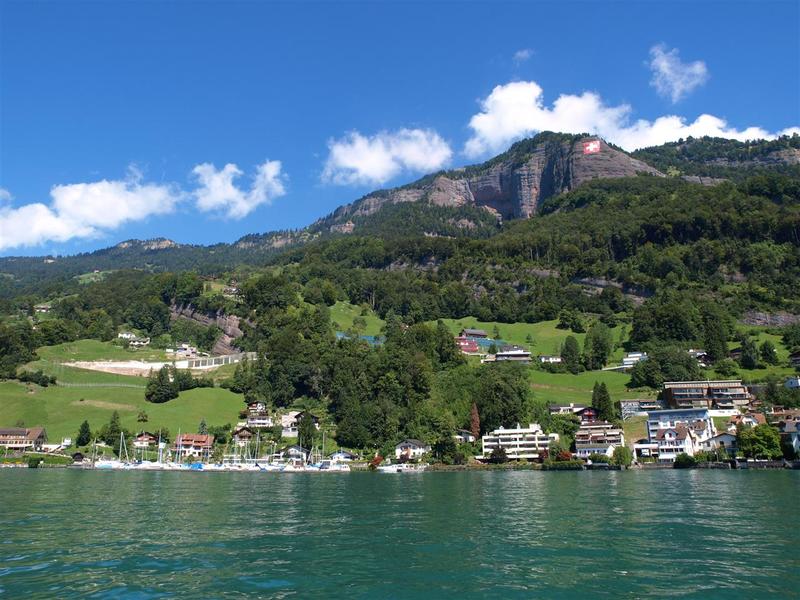

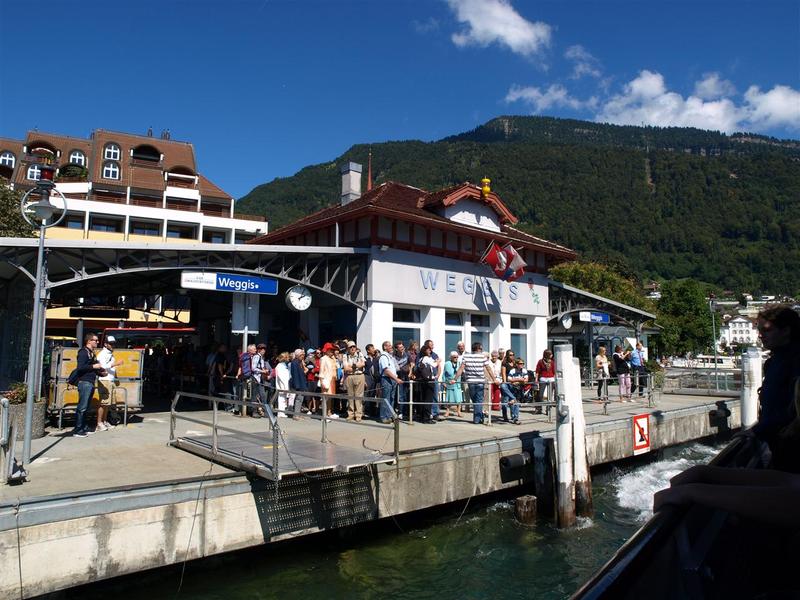
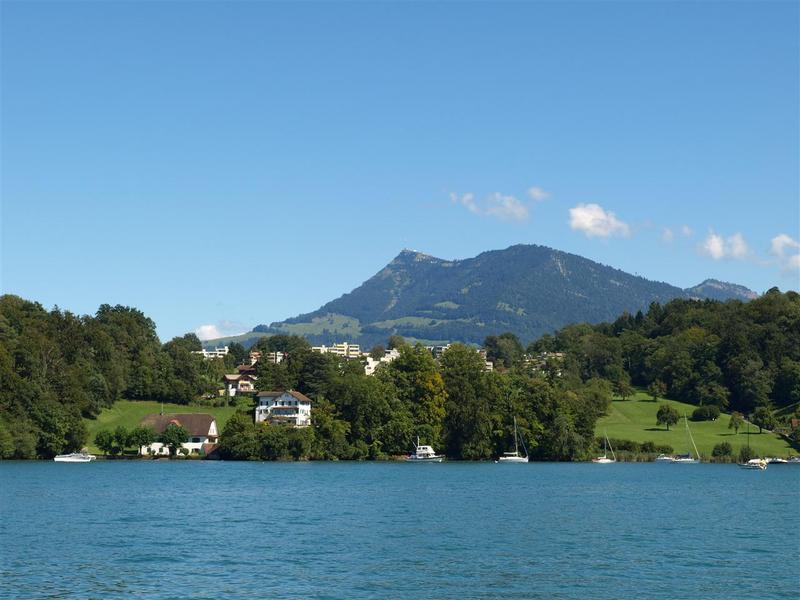
It turned into a lovely steamship journey to Luzern. The breeze across the lake was chilly but refreshing, and I almost found myself craving a beer. However, I decided against it since I thought I’d probably fall asleep from the hiking fatigue if I drank ;). The first stop was Weggis, which is another gateway to Mount Rigi. From here, you can take a cable car to the top. In the 5th photo, the sharp peak on the left side is the summit of Rigi, and since I descended towards the right, I realized I had walked quite a distance.


The lakeside towns continue to be wonderful places that look so inviting. The water is clear, and since the weather was great and the temperature was rising that day, there were quite a few people enjoying themselves by the water. After about an hour of sailing, a large city came into view. We had arrived at Luzern, the fourth-largest city in Switzerland.
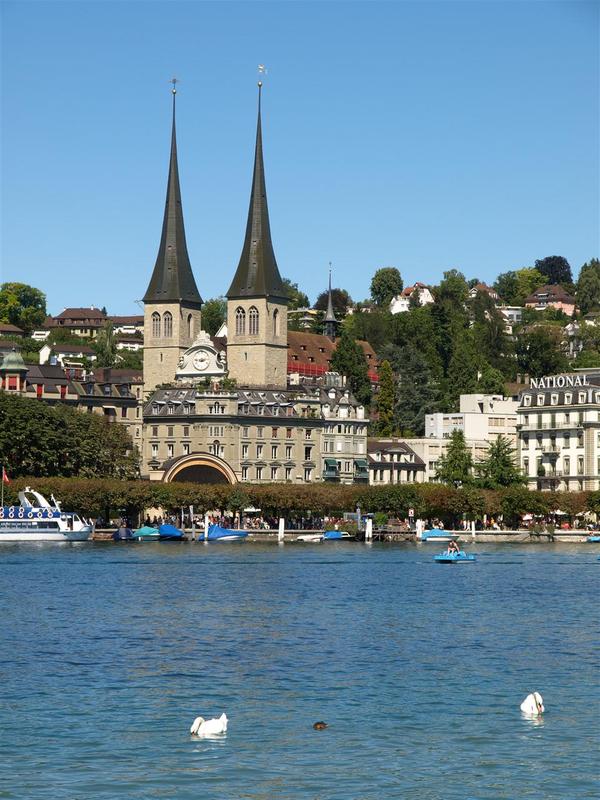


From the boat, I could see a casino along the lakeshore, as well as the old town, which still retains a strong medieval atmosphere. It gave the impression of a resort town with a vibe I hadn’t seen much before. Since I still had a little time before my return flight, I decided to take the opportunity to explore the city a bit.


The first thing that catches the eye when you reach the quay is the Kapellbrücke, a wooden covered bridge. The bridge is beautifully adorned with flowers on both sides, making it quite picturesque. In fact, this wooden bridge was part of a city wall built to protect the town from enemy attacks coming by lake. It was completed in 1333, making it the oldest covered wooden bridge in Europe. The beams of the bridge are decorated with several triangular paintings, which depict the history of the city.

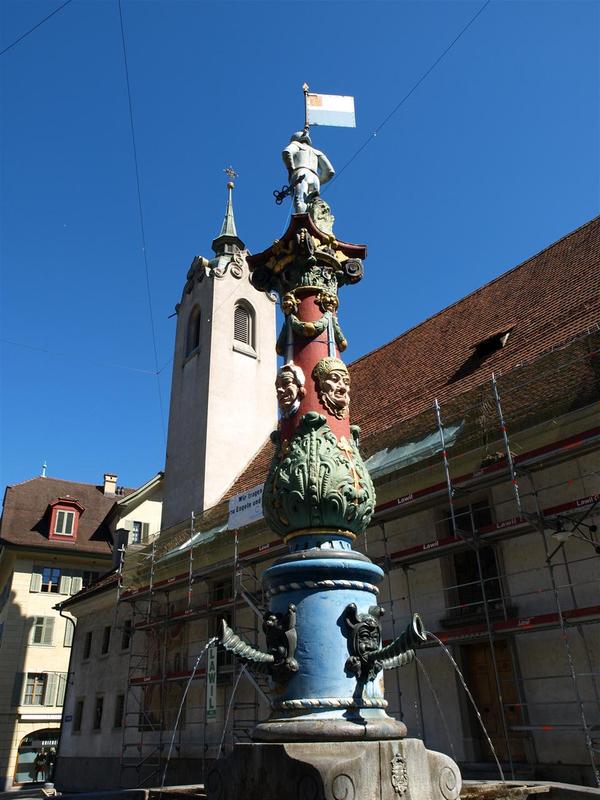


The old town along the Reuss River, which flows from Lake Vierwaldstättersee visible from the summit of Mount Rigi, is described in the guide book as “While most medieval old towns with narrow cobbled streets tend to have a dark and gloomy atmosphere, Luzern is bright and full of vitality.” This creates a fascinating, contrasting atmosphere, combining the lively feel of a resort town with the charm of a historic one. Still, what caught my attention was this sign that looks like a taiyaki (a fish-shaped pastry).


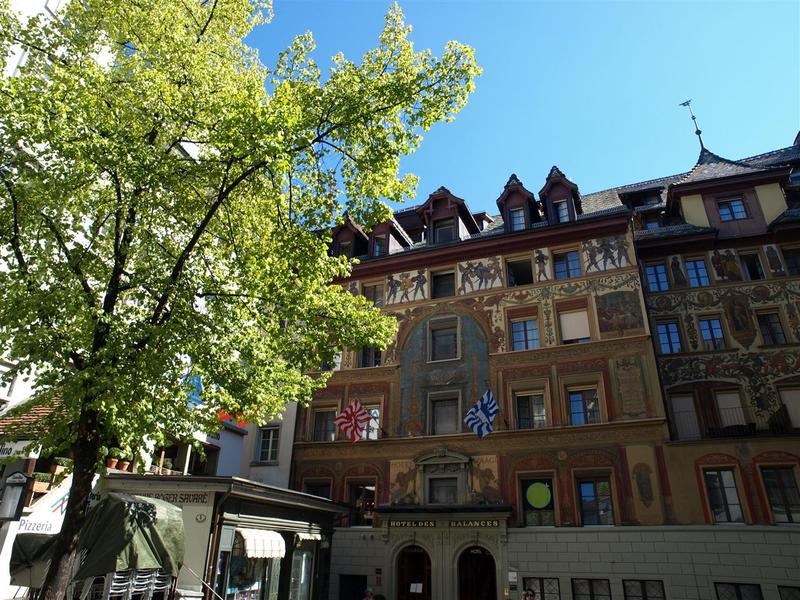

Luzern seems to have many attractions, but since I didn’t have much time and, more importantly, because of the pain in my knee, I wasn’t able to walk around much. So, I just strolled through the old town, which retains a strong medieval atmosphere, and unfortunately that was the end of my visit. Well, if I have the chance to come back, I’ll save the rest for next time!
Zurich airport

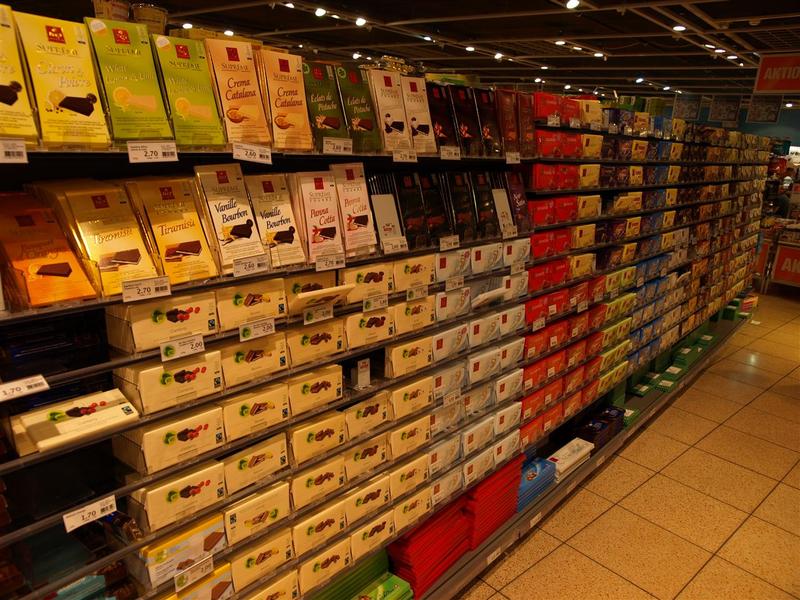


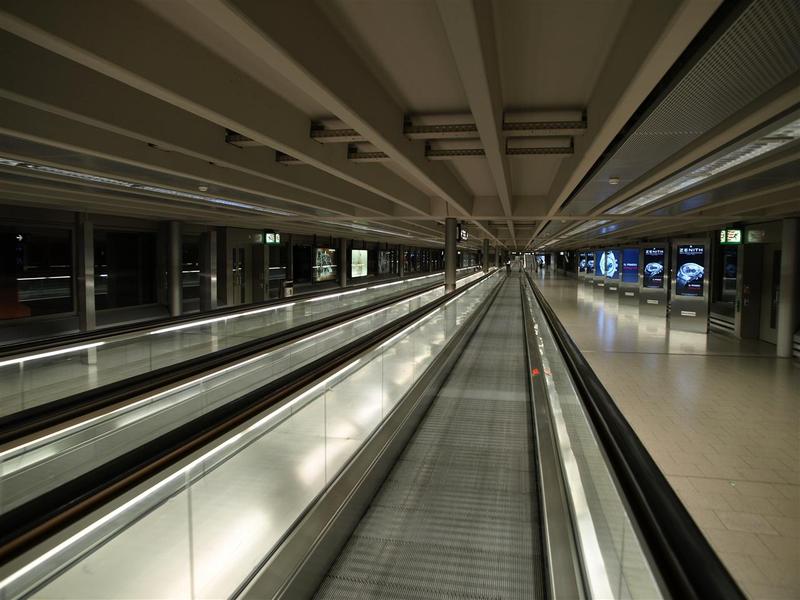
Zurich Airport was very clean and functional. What made me happy was the supermarket inside the airport. Normally, I visit supermarkets when I travel, but this time I didn’t have much time, so I hadn’t been able to go. However, I found one at the airport. I couldn’t help but be drawn to the chocolate section. There were so many varieties that I got a bit overwhelmed, but I ended up using all the remaining Swiss francs to buy a bunch of chocolates. The overall design of the store was also simple and Nordic, with a warmth from the wood that I really liked. The cost of living is very high, so I don’t think I’ll be able to visit often (haha), but I’d love to bring my family and come back to enjoy Switzerland’s beautiful scenery.