[Access] About 10 minutes walk from Zao Onsen bus terminal
[Webpage] Zao Shiki no Hotel
One of the highlights of hiking Mt. Zao is, of course, Zao Onsen. I was really looking forward to soaking in its strongly acidic, milky-white waters with a rich sulfur smell—something I hadn’t experienced in a while. After descending to Jyuhyo Kogen Station and taking the ropeway down to Zao Sanroku Station, I looked for a nearby bath and found Hanare-yu Hyaku-happo. With its wooden building typical of Zao Onsen and its strongly acidic waters, it looked atmospheric and promising.


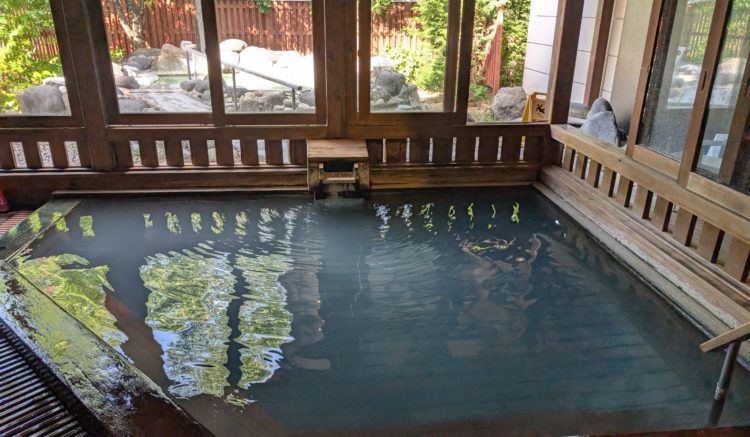
Perhaps because it was still relatively early, there was no one else there, and I had the baths all to myself. The outdoor bath had a slightly greenish tint, possibly due to the way the light hit the water, while the indoor bath glowed with a mysterious pale blue-white color. The indoor bath in particular was at a perfect temperature—not too hot, not too cool—making it easy to relax and enjoy a long soak.
The spring quality is classified as an acidic, sulfur-containing aluminum sulfate–chloride hot spring, with a total mineral content of 2,673 mg/kg and a very strong acidity of pH 1.7. Tasting the water revealed an intense sourness and bitterness, along with a distinct sulfur smell. Despite this, the water feels surprisingly gentle and smooth on the skin, which is a bit of a mystery given how acidic it is.
The list of therapeutic indications on the hot spring analysis chart was impressive—almost to the point where it felt like it could cure just about anything. It listed benefits such as:
- Chronic muscle or joint pain and stiffness (including rheumatoid arthritis, osteoarthritis, lower back pain, neuralgia, frozen shoulder, bruises, and sprains in the chronic stage)
- Muscle stiffness due to motor impairment
- Sensitivity to cold
- Peripheral circulatory disorders
- Digestive issues (such as stomach heaviness or intestinal gas)
- Mild hypertension
- Impaired glucose tolerance (diabetes)
- Mild hypercholesterolemia
- Mild asthma or emphysema
- Hemorrhoid pain
- Autonomic nervous system imbalance
- Stress-related symptoms (sleep disorders, depressive states, etc.)
- Recovery after illness
- Fatigue recovery
- General health promotion
- Minor cuts
- Dry skin
- Atopic dermatitis
- Psoriasis
- Pyoderma
- Chronic eczema
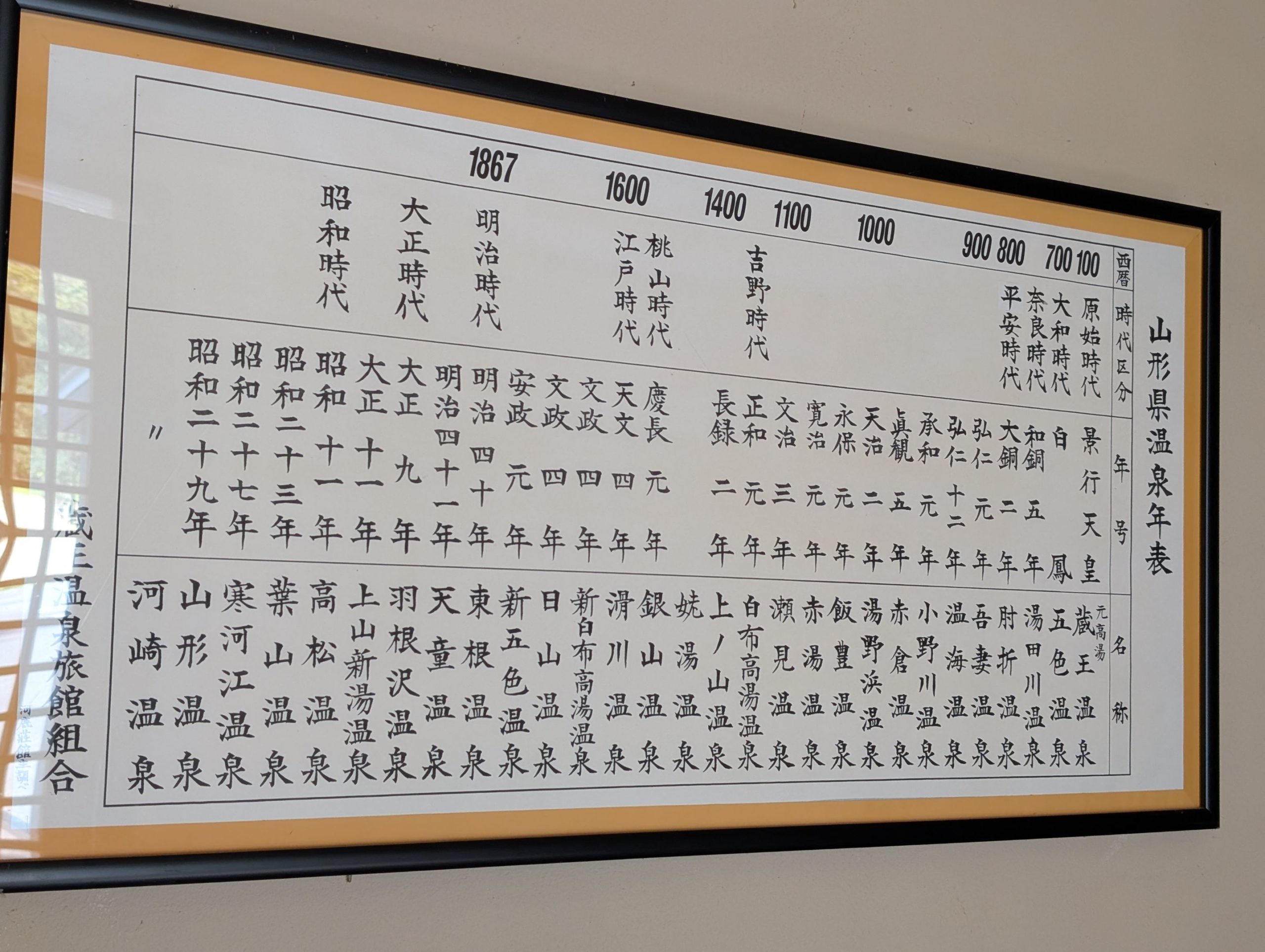
Inside the facility, there was a displayed timeline of hot springs in Yamagata Prefecture, showing when each onsen area first opened. From this, it was clear that Zao Onsen stands out as having an exceptionally long history. Looking at the list as a whole also made me realize just how many renowned hot springs Yamagata has.
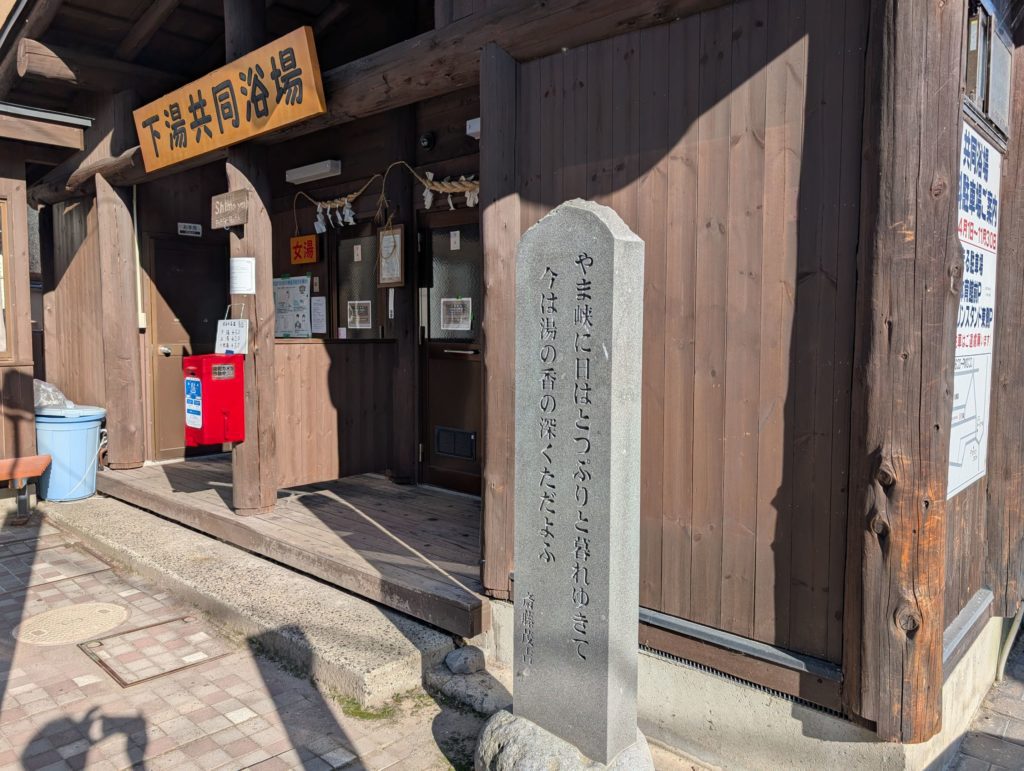
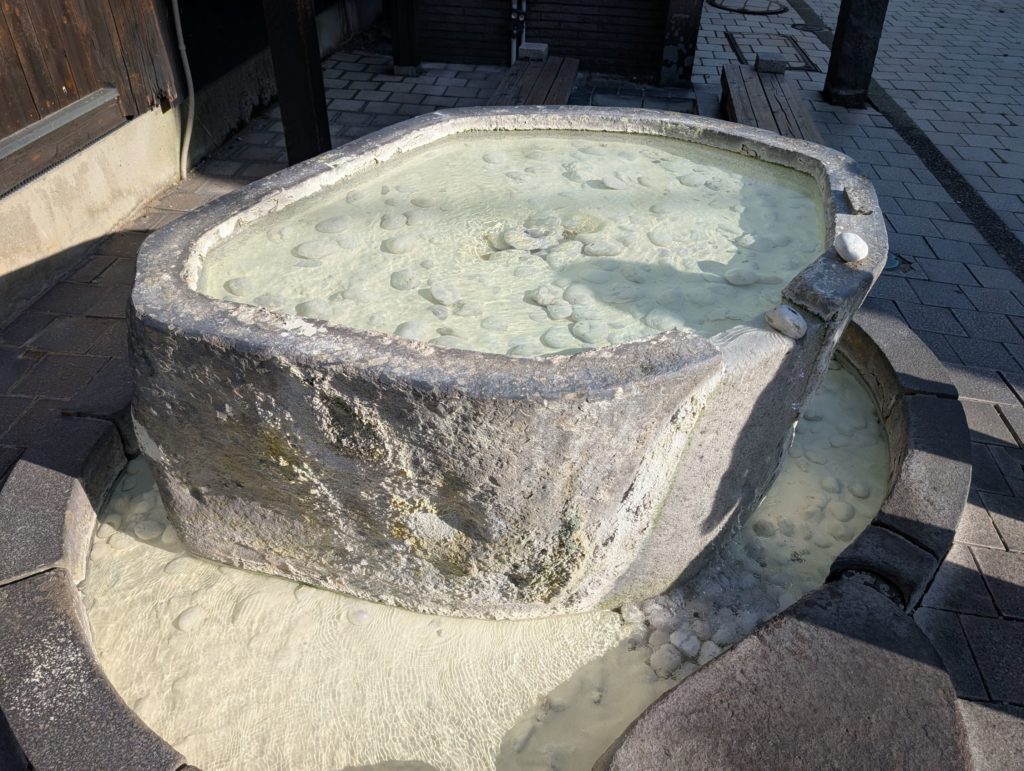
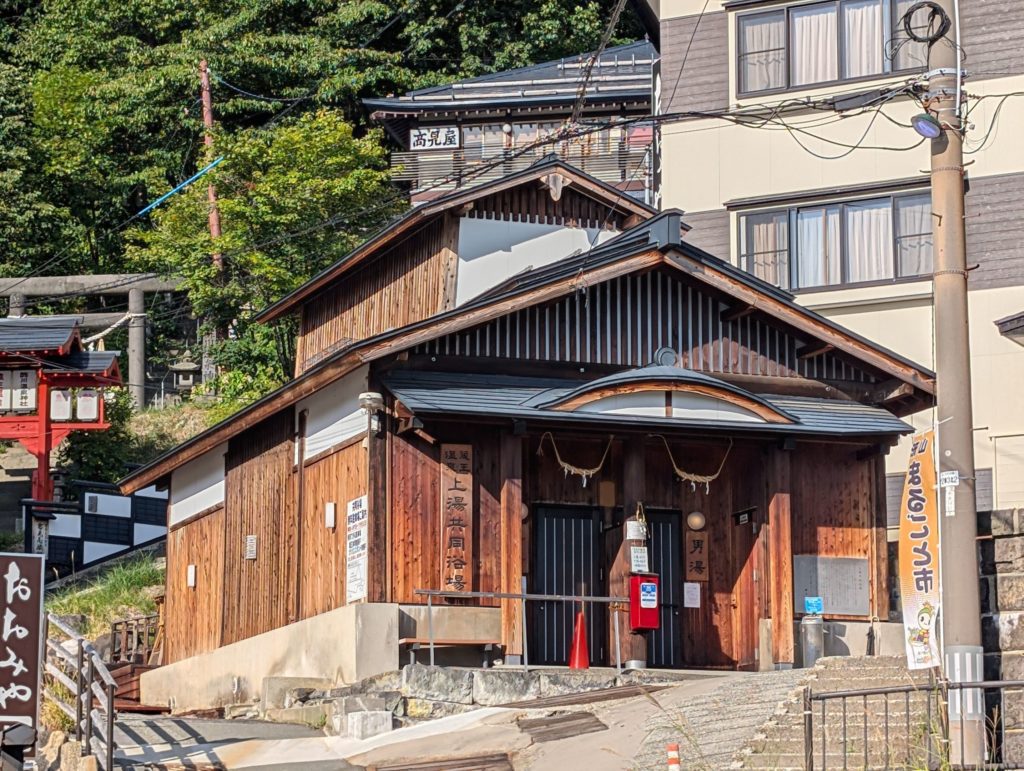
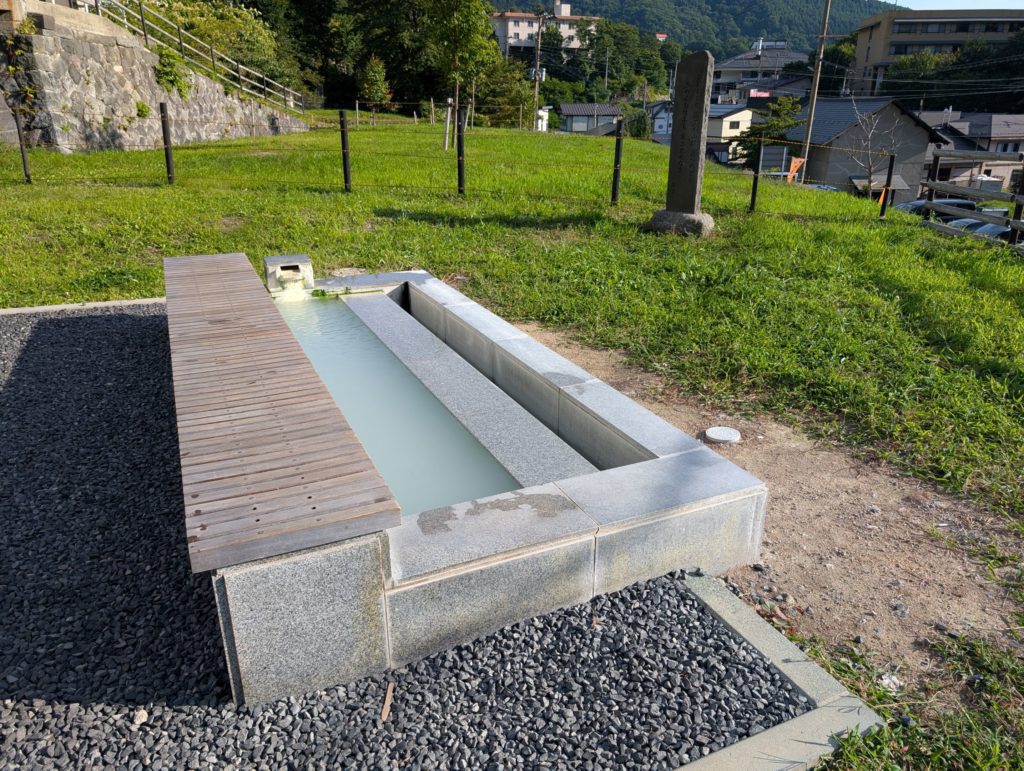
With a little time before my return bus, I took a short walk around the nearby Shimoyu and Kamiyu public bathhouses, located right by the bus terminal. The hot spring source near Kamiyu reportedly has an average temperature of 47°C and an abundant flow of over 4,000 liters per minute, supplying both the public baths and the indoor baths of nearby ryokan. An interesting detail is that each bathhouse entrance displays the current water temperature for Kamiyu, Shimoyu, and Kawarayu, making it easy to avoid baths that might be too hot for some people. On this day, the temperatures were 41.5°C at Kamiyu, 45.0°C at Shimoyu, and 43.0°C at Kawarayu—so Shimoyu might have been a bit too intense.
In the past, Zao was mainly a winter destination for skiing for us, but I realized I hadn’t visited in over 20 years. This was also my first time enjoying Mt. Zao and the Okama crater in summer. Even though I’d been to Zao many times before, I had always stayed in the same area, so this was actually my first time seeing the public bathhouses—and I didn’t even get to try them. All of that makes me think that a return trip for skiing and plenty of hot spring hopping would be a great idea.